
Recently, multiple research projects by faculty members and students of the Communication Studies Concentration, Master of Arts in Communication, at Beijing Normal–Hong Kong Baptist University (BNBU) were presented at domestic and international academic conferences and forums. The studies covered a wide range of cutting-edge topics, including journalism education in the age of intelligent communication, discourse on climate governance, generative artificial intelligence and changes in the public relations profession, film communication and visual culture, ideological and political education in urban spaces, intercultural communication, and youth digital labor. These achievements demonstrate the sustained research vitality of faculty members and students in the Communication Studies Concentration, reflecting their continued engagement with emerging issues in communication studies and active participation in academic exchange.
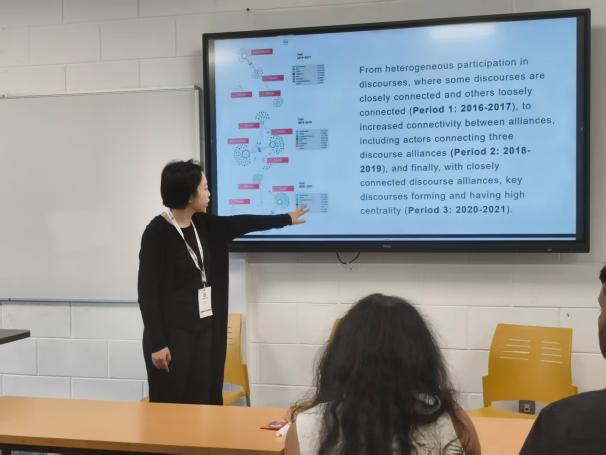
From June 28 to July 2, 2026, the International Association for Media and Communication Research (IAMCR) 2026 Conference was held in Galway, Ireland. Dr. Xu Miao, Associate Programme Director of the Communication Studies Concentration, and Dr. Li Mengqi from the Department of Communication presented their research on climate governance discourse at the conference. Focusing on discourse surrounding climate governance, the study examines the contestation of discursive power among multiple actors involved in the communication of environmental issues and analyzes the distinctive mechanisms through which discourse operates in the local context, contributing to theoretical research on environmental communication and global climate governance.
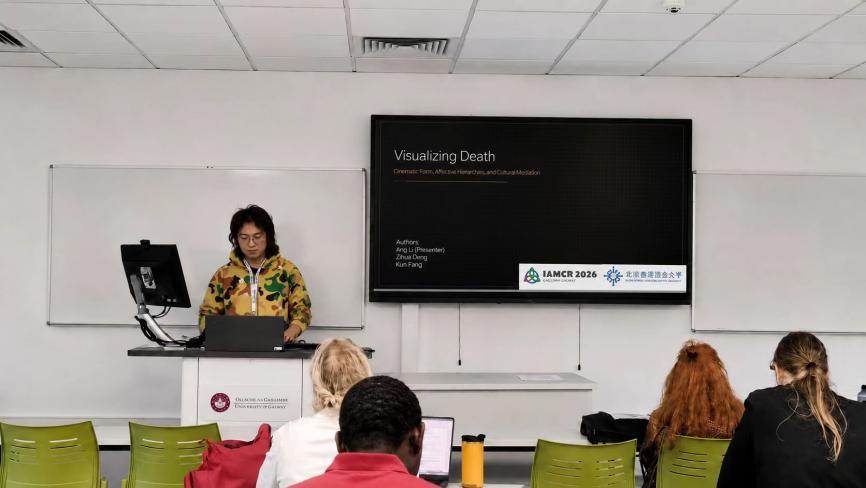
Li Ang, a 2026 graduate of the Communication Studies Concentration, together with Deng Zihua, a 2025 graduate of the Communication Studies Concentration, and Fang Kun, a doctoral student enrolled in 2026, also presented research on the visualization of death in film at the conference. Drawing on film form, audience emotion, and cultural context, the study explores how death is transformed into a visual experience that can be seen and perceived, revealing the underlying logic through which film participates in the production of meaning around death and in cultural communication. The research further enriches scholarship on film communication and visual culture.
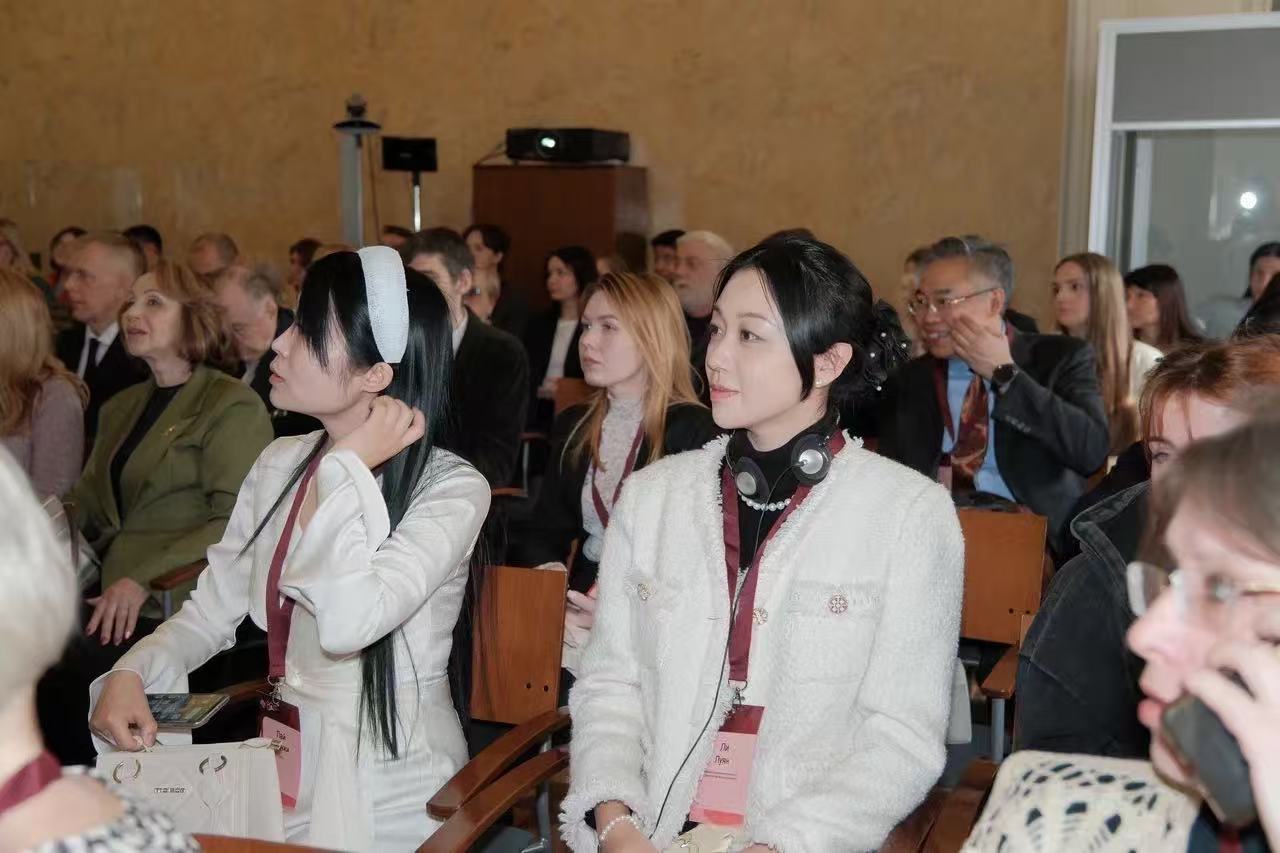
Dr. Li Luyang, Programme Director of the Communication Studies Concentration, was invited to attend the 80th Anniversary Celebration of Journalism Education at St Petersburg State University and the international media forum “Media in the Modern World: The 65th St Petersburg Readings.” She delivered a presentation titled “Journalism Education in the Age of Intelligent Communication: Opportunities and Challenges in Intercultural Contexts.”
Her presentation focused on the opportunities and challenges facing journalism education in the age of intelligent communication. From an intercultural communication perspective, she discussed how advances in artificial intelligence are influencing educational philosophies, curriculum development, and talent cultivation models in journalism and communication education. Dr. Li also introduced BNBU’s exploration and practices in postgraduate education, internationalized education, and liberal arts education, highlighting the University’s distinctive approach to interdisciplinary talent development and global communication education.
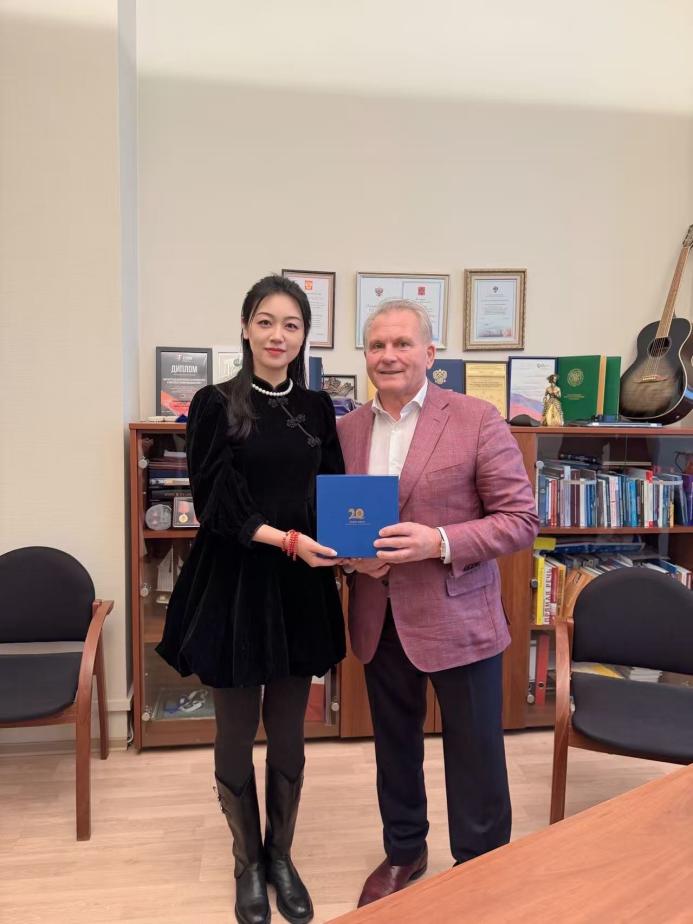
Following the forum, Dr. Li presented a BNBU commemorative gift to Anatoly Stepanovich Puyu, Dean of the School of Journalism and Mass Communications at St Petersburg State University, further strengthening communication between the two institutions in journalism and communication education and academic exchange.
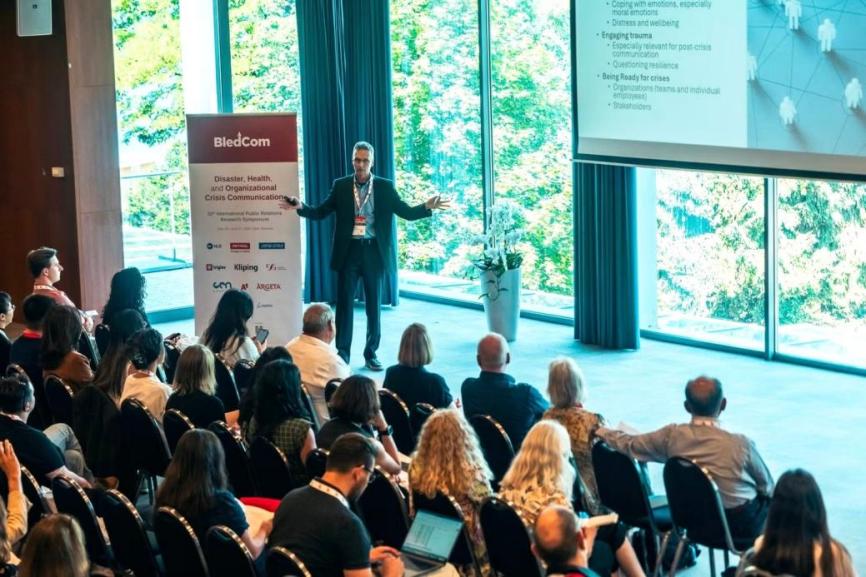
On July 26, 2026, Dr. Huang Lei, Assistant Professor of Communication at Hong Kong Baptist University, and Ms. Shen Wenxin, Assistant Instructor of the Communication Studies Concentration at BNBU, presented their research titled “Forced Versatility and Stretched Profession: Resocialization of PR Practitioners in the Generative AI Era” at the 33rd BledCom International Public Relations Research Symposium.
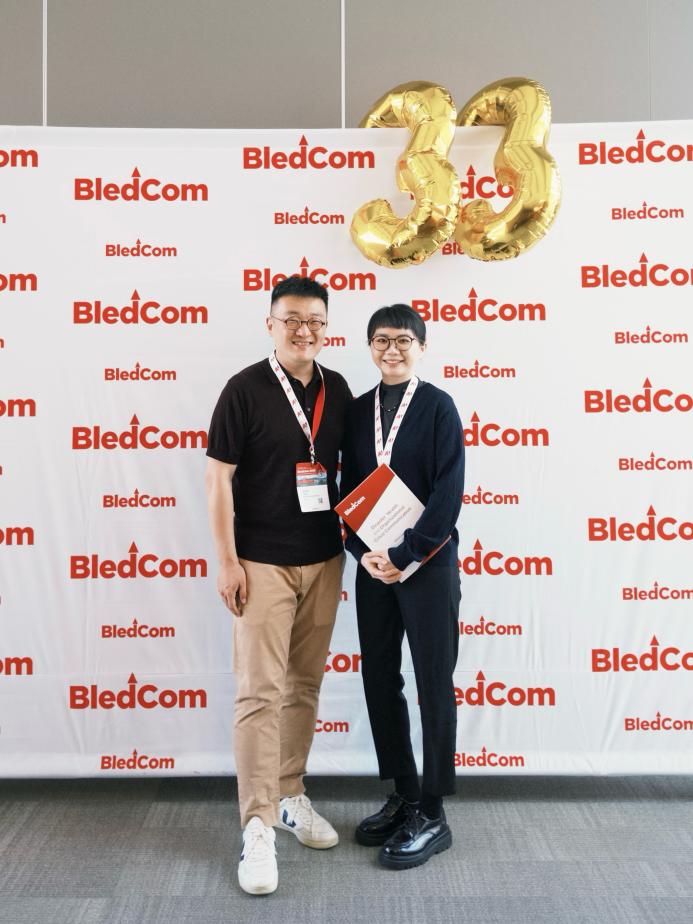
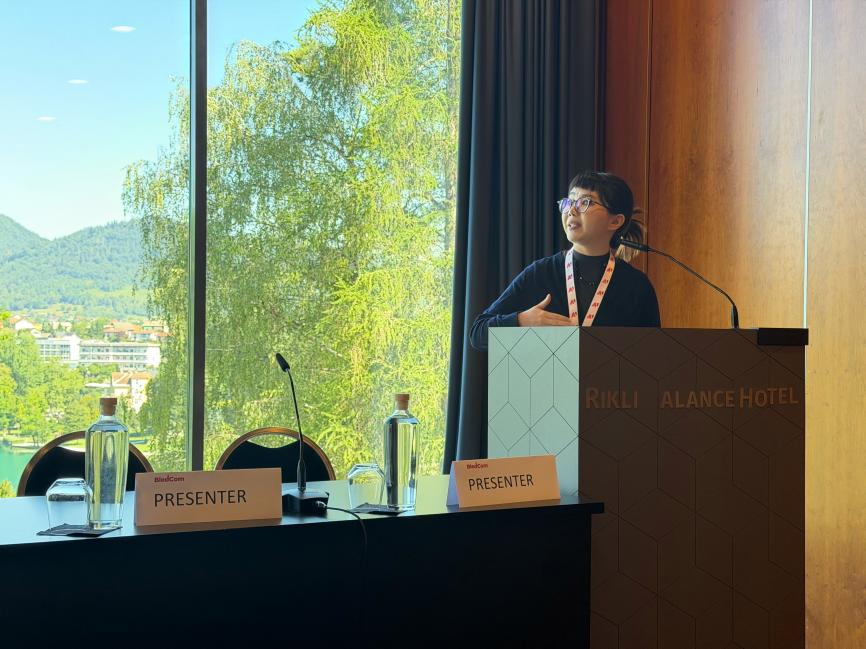
The study examines how public relations practitioners in China are reinterpreting their professional roles as generative AI becomes increasingly embedded in everyday PR work. Based on in-depth interviews with PR practitioners, the research shows that generative AI is reshaping the boundaries of public relations work, changing the competencies required of practitioners, and influencing how organizations assess professional value.
The study finds that PR practitioners are undergoing significant changes in professional identity, giving rise to four emerging role perceptions: AI orchestrators, hybrid integration specialists, guardians of human-centered values, and strategic managers of AI visibility and legitimacy. It further argues that generative AI, on the one hand, intensifies the existing blending of functions and expansion of responsibilities within the PR profession, placing greater pressure on practitioners to improve efficiency and develop multiple competencies. On the other hand, it also prompts practitioners to reconsider the irreplaceable value of human judgment, relationship management, emotional understanding, and strategic insight in professional practice. The study provides new empirical evidence and theoretical perspectives for understanding the resocialization of the public relations profession, the reconstruction of professional roles, and the evolution of PR professionalism in the Chinese context in the age of artificial intelligence.
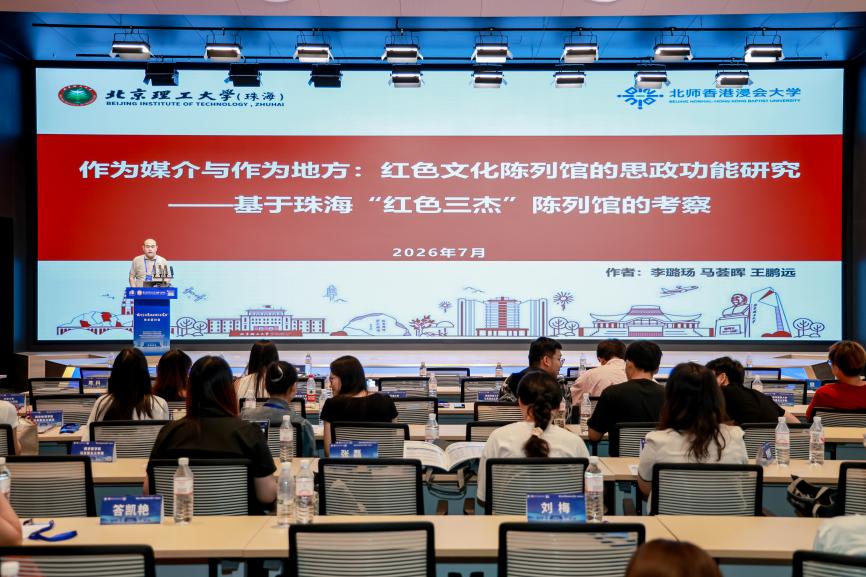
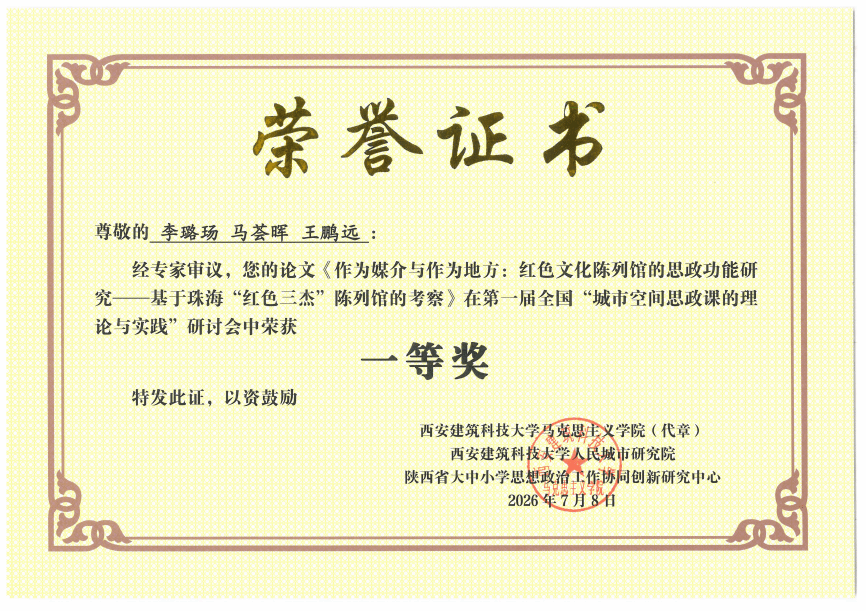
On July 9, Wang Pengyuan, a 2023 graduate of the Communication Studies Concentration and an administrative staff member at Beijing Institute of Technology, Zhuhai, attended the inaugural Symposium on the Theory and Practice of Ideological and Political Education in Urban Spaces as a representative author. The symposium was jointly organized by the School of Marxism at Xi’an University of Architecture and Technology and other institutions.
Wang presented the paper “As Medium and as Place: A Study of the Ideological and Political Functions of Red Culture Exhibition Halls — A Case Study of the ‘Three Red Heroes’ Exhibition Hall in Zhuhai.” The symposium featured discussions on topics including the development of ideological and political education through urban spaces, the integration of ideological and political education across primary, secondary, and higher education, and the educational value of urban industrial heritage and historic districts.
The paper was co-authored by Dr. Li Luyang, Ma Huihui, a counselor and doctoral student at Beijing Institute of Technology, Zhuhai, and Wang Pengyuan, and was awarded the First Prize at the symposium. Taking spatial media as its analytical perspective and the “Three Red Heroes” Exhibition Hall in Zhuhai as a case study, the research explores how red culture exhibition halls function as spaces for ideological and political education. It provides both theoretical support and case-based evidence for expanding practical approaches to ideological and political education.
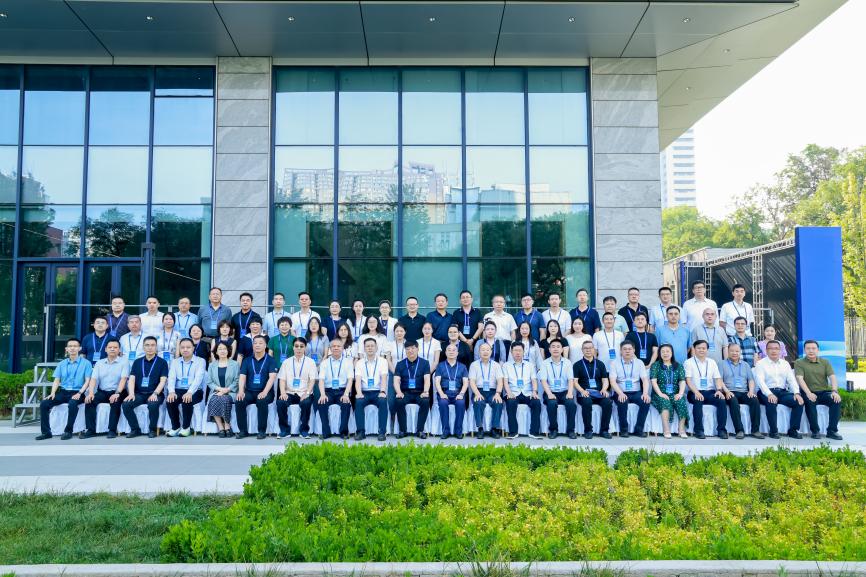
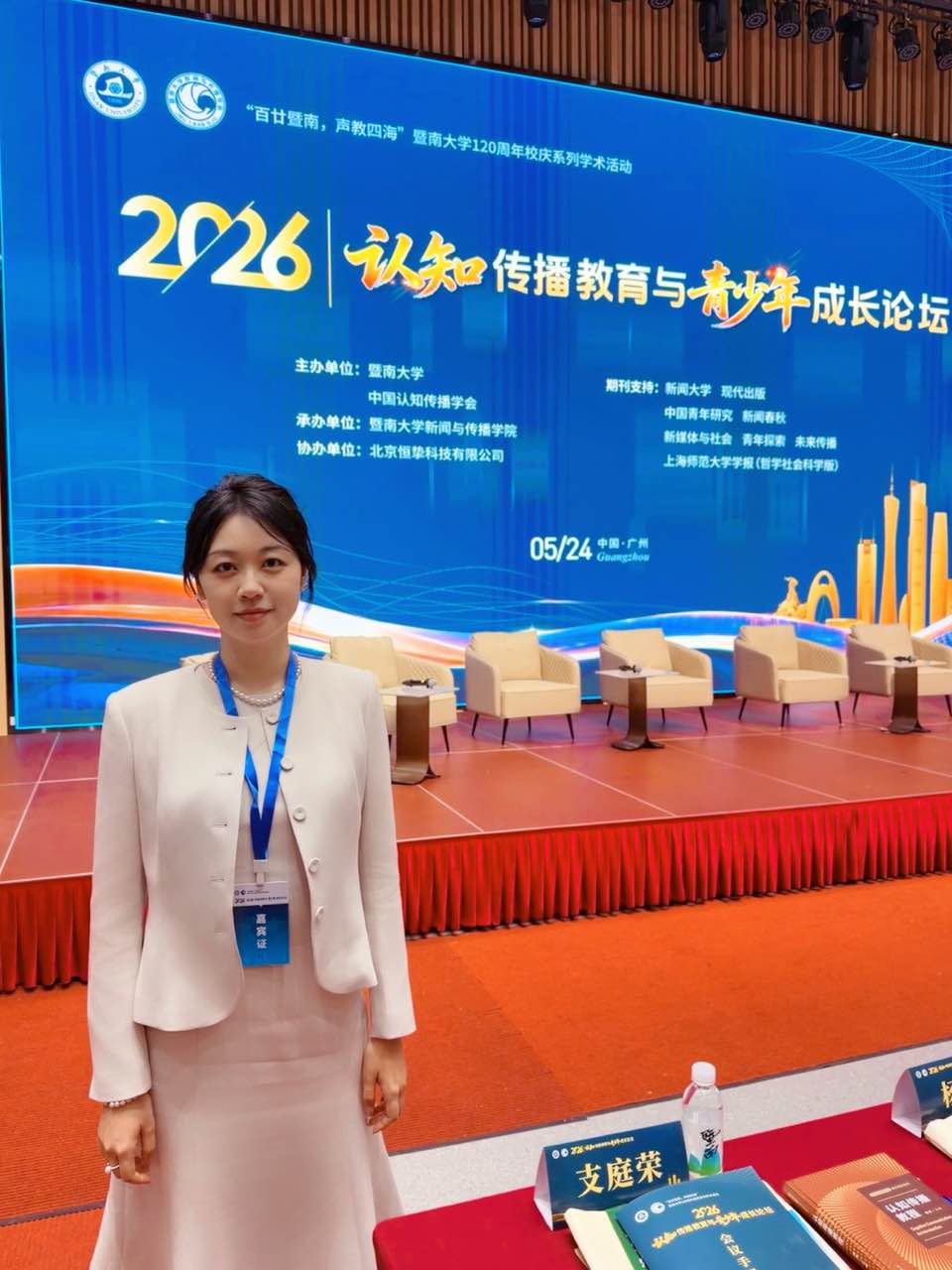
On May 24, the 2026 Forum on Cognitive Communication Education and Youth Development was held at Jinan University, focusing on youth cognitive development, digital literacy, and educational innovation in the age of AI.
Dr. Li Luyang led a postgraduate research team in presenting a paper titled “Digital Spring Festival: A Study of the Spatiotemporal Embeddedness of Youth Digital Labor in Platform Activities” at the parallel session “Youth Entertainment Practices and Experiences in Platform Society.” Using the “Digital Spring Festival” as an entry point, the study reveals how young digital workers engage in emotional labor and cultural reproduction through spatiotemporal embeddedness within platform environments.
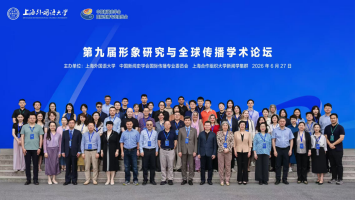
On June 27, the 9th Academic Forum on Image Studies and Global Communication was held at Shanghai International Studies University. Under the theme “Reshaping the Global Communication Order: Equity, Cooperation and Mutual Learning among Civilizations,” the forum brought together scholars from multiple countries.
Dr. Li Luyang led a postgraduate research team in presenting a paper titled “From Cultural Translation to Glocalization: A Case Study of Strategies for Decoding Confucian Culture” at the parallel session on Intercultural Communication Studies. From the perspectives of cultural translation and glocalization, the study examines decoding strategies and localization mechanisms for Confucian culture in intercultural contexts, offering a new research perspective for understanding the intercultural communication of outstanding traditional Chinese culture.
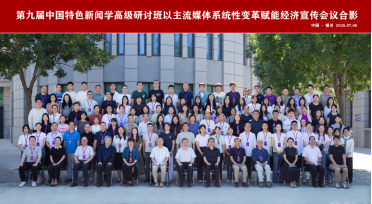
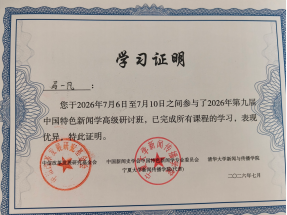
From July 6 to 10, the 9th Advanced Seminar on Journalism with Chinese Characteristics, themed “Empowering Economic Communication through the Systematic Transformation of Mainstream Media,” was held at Ningxia University. Young scholars and media professionals from across China exchanged views on topics including the systematic transformation of mainstream media, economic communication, and communication on ethnic unity and progress.
Ma Yifan, a 2025 graduate of the Communication Studies Concentration, participated throughout the seminar and engaged in in-depth exchanges with academics and industry professionals, further broadening her understanding of the theories and practices of journalism with Chinese characteristics.
The presentation of these research achievements at domestic and international academic conferences and forums reflects the sustained exploration of faculty members and students of the Communication Studies Concentration across diverse areas of communication research. It also highlights the Concentration’s academic engagement with journalism and communication education, environmental communication, public relations, AI-mediated communication, intercultural communication, visual culture, and youth digital practices.
Looking ahead, the Communication Studies Concentration will continue to support faculty members and students in participating in high-level academic exchanges and promote the sharing, dialogue, and mutual learning of research achievements on broader academic platforms.
