
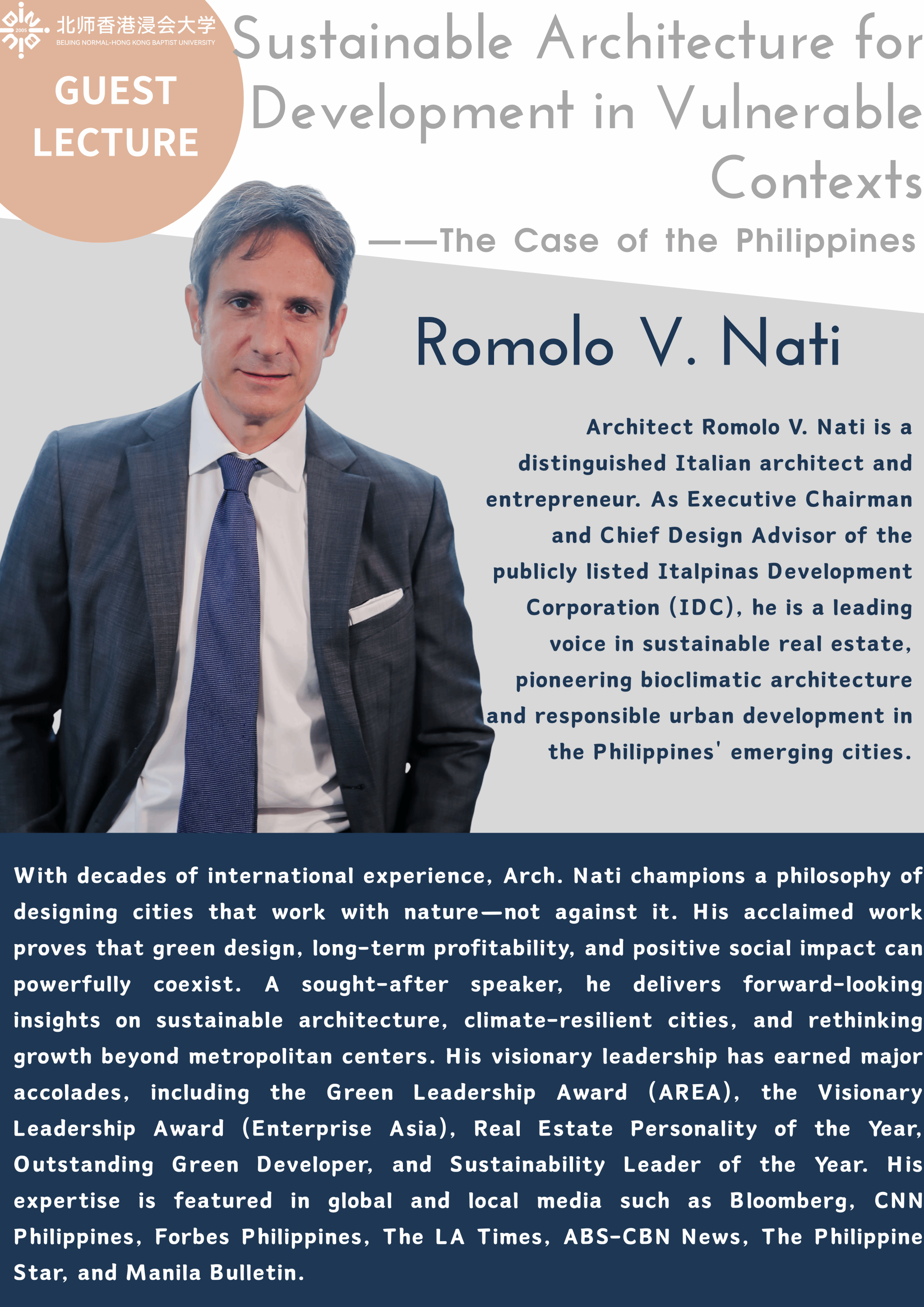
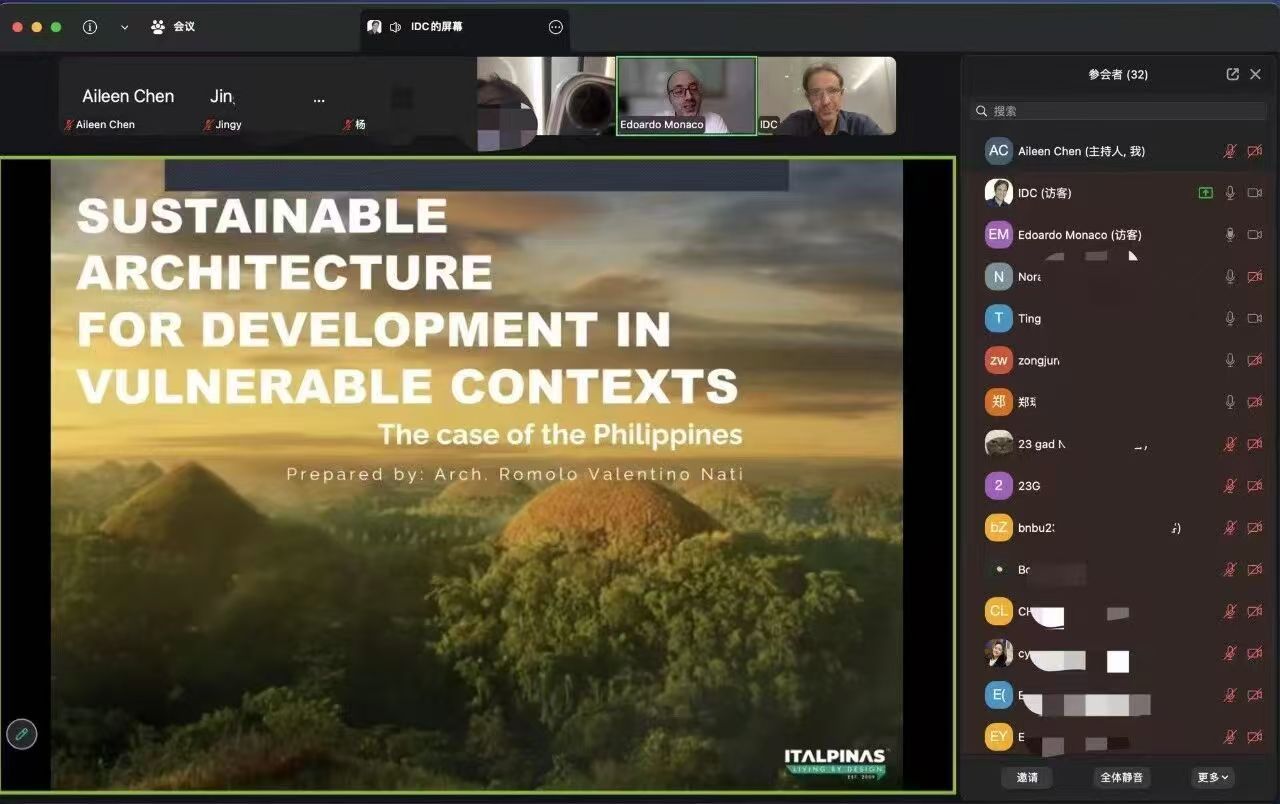
On the evening of April 16, invited by Dr. Edoardo MONACO, Head of the Department of Social Sciences at BNBU, Italian architect Romolo V. Nati, Executive Chairman of Italpinas Development Corporation (IDC), delivered an online guest lecture titled “Sustainable Architecture for Development in Vulnerable Contexts – The Case of the Philippines.” With over a decade of experience in the country, Nati demonstrated through hard data and real projects that green building is not abstract theory — it affects the economy, society, the environment, and even human dignity.
Buildings account for 34% of global CO₂ emissions and 32% of energy use, while Southeast Asia still relies on 75% fossil fuels. Nati argued that true sustainability does not depend on expensive high-tech “active” systems. Instead, he champions passive green design: natural ventilation, shading, daylighting, rainwater harvesting, biomimicry (e.g., coral reef structures), and vernacular wisdom such as the Philippine Nipa Hut. His firm uses parametric software to analyze wind, sun, and temperature for each location.
The Philippines faces a massive housing gap — 12 million units needed by 2030, but only 2.7 million expected. IDC targets this market with affordable, beautiful, and green mid-rise buildings in emerging cities. Projects like Verona (sold out in two months) and Miramonti (managed by Citadines) proved highly successful. A pioneering Power Purchase Agreement (PPA) allows a solar company to install rooftop panels at no cost to the developer, selling cheaper electricity to residents — a true win-win-win model.
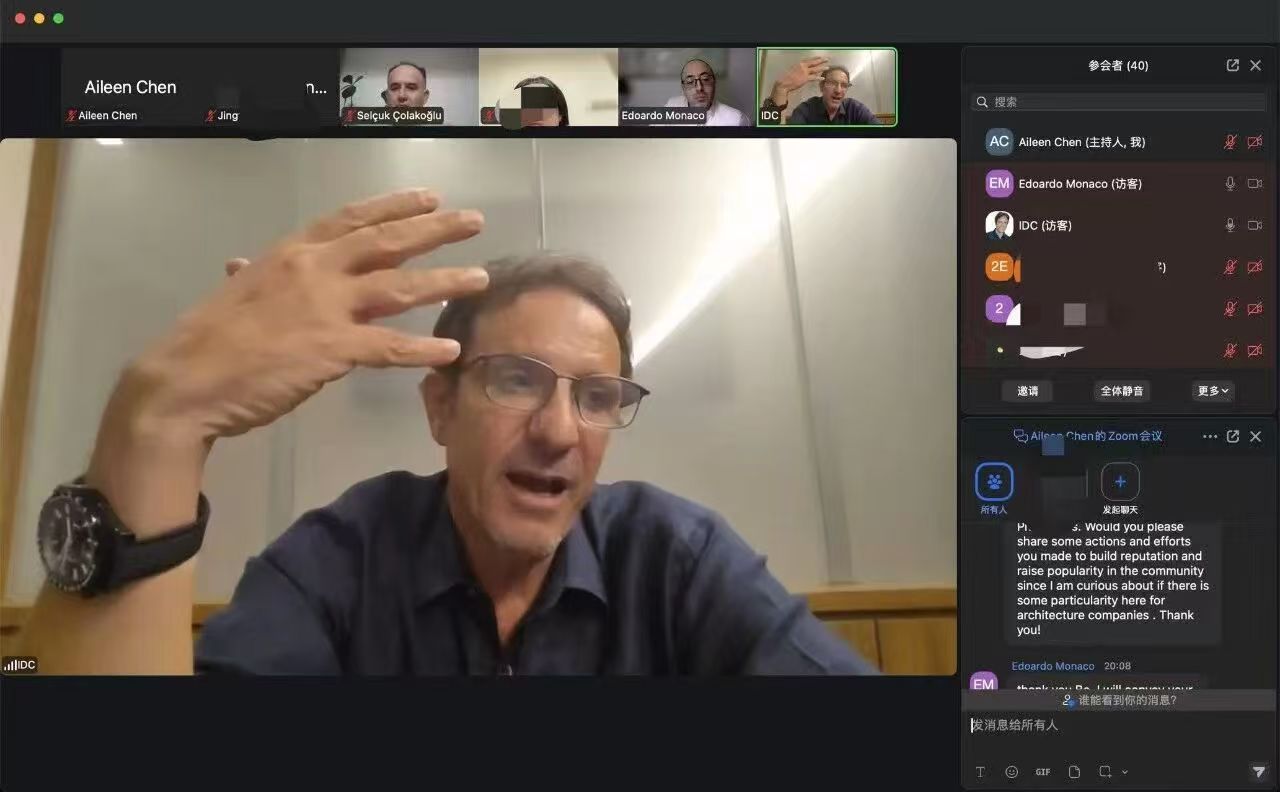
During the Q&A, Nati addressed applicability in different contexts such as China and Pacific island nations. The core concept — creating value and saving energy — can be exported, but designs must adapt to local demography, climate, and resources. China’s high-density cities require high-rise solutions, while the Philippines suits mid-rise. For vulnerable island nations with weak infrastructure and cyclones, local materials and climate-resilient design are essential. Nati stressed that sustainability only works if it makes financial sense for the buyer: lower bills, healthier homes. It is not charity but a genuine business opportunity. He advised students not to wait for the perfect moment, to create user value, and to remember that beauty and functionality must go together.
©2024-2025 Beijing Normal-Hong Kong Baptist University(BNBU). All Rights Reserved.粤ICP备07509519号粤公网安备44049102496044.
