On September 15, 2026, Mr. Yichen Shi, a trainer from Gale China, was invited by the Learning Resource Center (LRC) and Transdisciplinary Digital Humanities program (TDH) to deliver a lecture to the staff of LRC and students from the Department of Languages and Cultures (DLC) at BNBU. The lecture aimed to help participants make better use of the Gale Digital Scholar Lab and Gale database in digital humanities research. It was chaired by Dr. Xi Xu, the Acting Associate Head of DLC.
Mr. Shi began by demonstrating Gale Digital Scholar Lab’s search and analytical functions and sharing examples of how prestigious universities around the world have used the database for literary studies and other digital humanities projects. These cases illustrated Gale’s powerful practical applications. Through digitization and analytical software, the database introduces certain research methods from the social sciences into the humanities, thereby innovating humanities research methodologies and paradigms—from qualitative research to quantitative methods that support qualitative analysis.
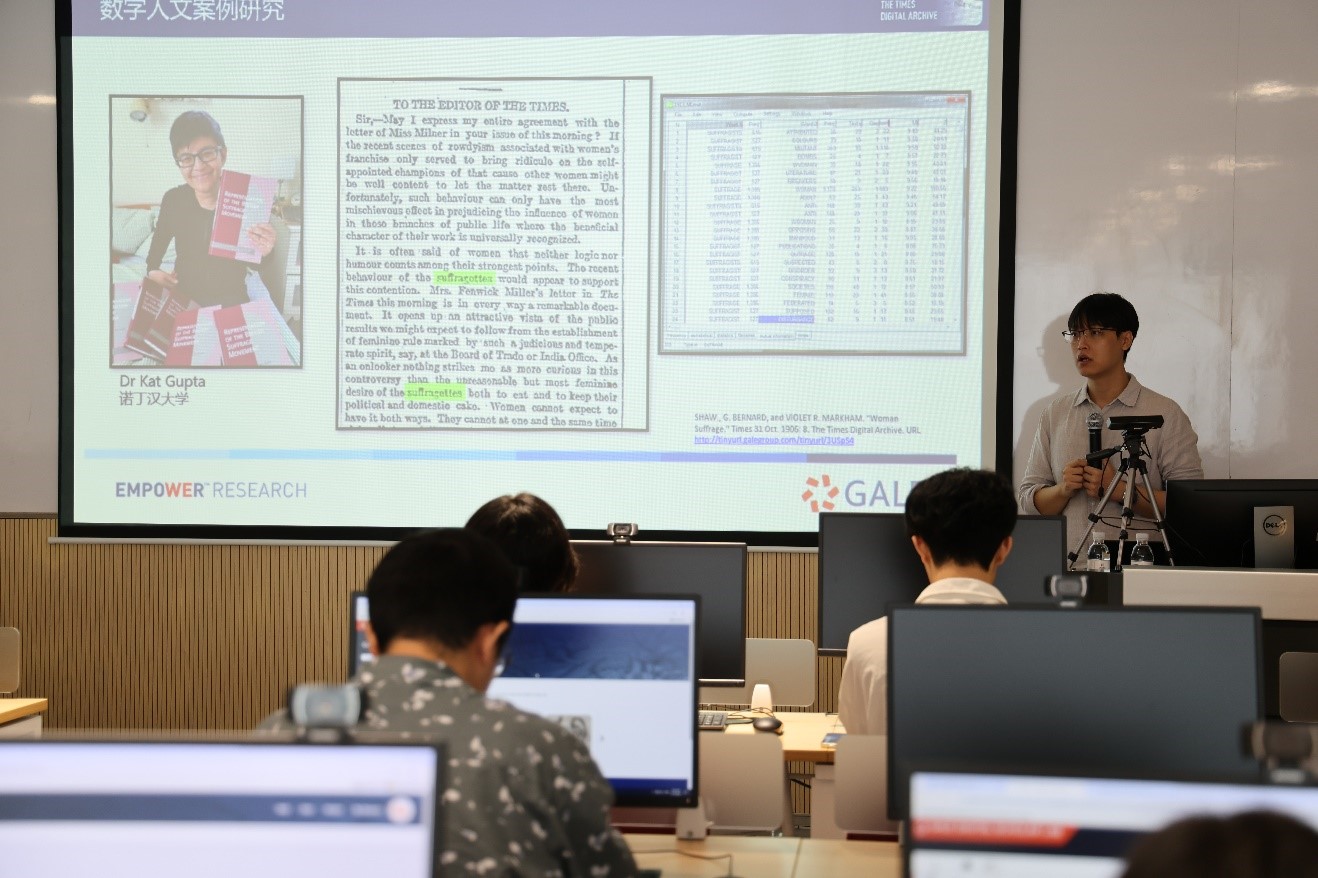
Picture: Mr. Shi was sharing some cases
Mr. Shi noted that digitally processed primary sources retain the content value, scholarly value, and reliability of the original documents while enabling researchers to make extensive use of modern data-analysis tools. This can reduce the time-consuming work involved in traditional research, improve efficiency and accuracy, and open up new avenues for digital humanities research.
In addition, the extensive corpus can help researchers identify not only textual materials but also other resources, such as images and videos. Through the database’s diverse search, analysis, and organization functions, users can more quickly clarify patterns and contexts within vast collections of texts, books, and data. They can also better identify connections and trends in relevant research, helping scholars produce innovative research outcomes more efficiently.
Dr. Xu also encouraged students to make active use of the Gale database to strengthen their research skills and support their future research projects. Following the lecture, many students expressed that they had benefited greatly. The session helped them recognize that the application of the Gale database in digital humanities can offer new perspectives for posing, defining, and answering questions in humanities research.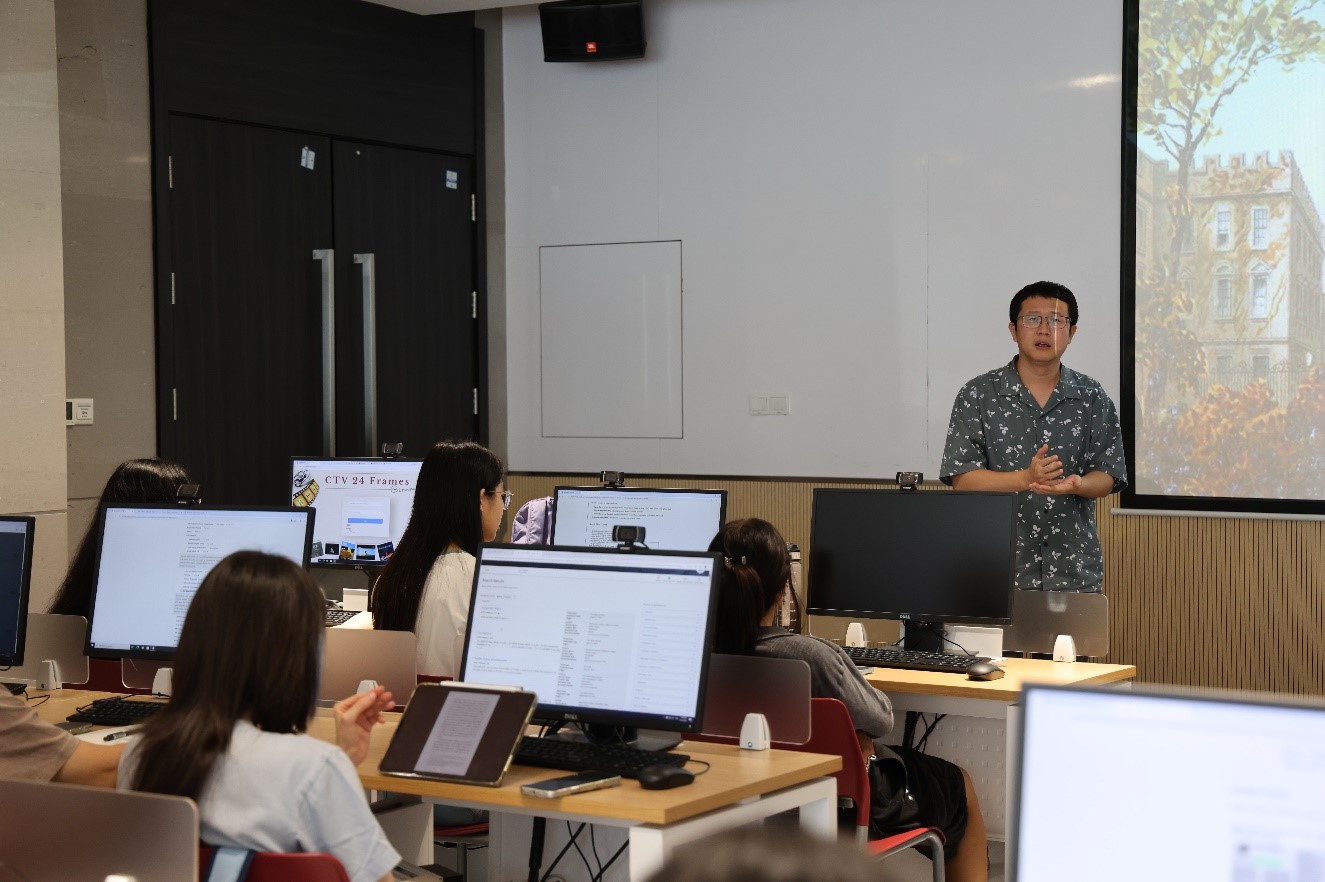
Picture: Dr. Xu was encouraging students to try some new research methods
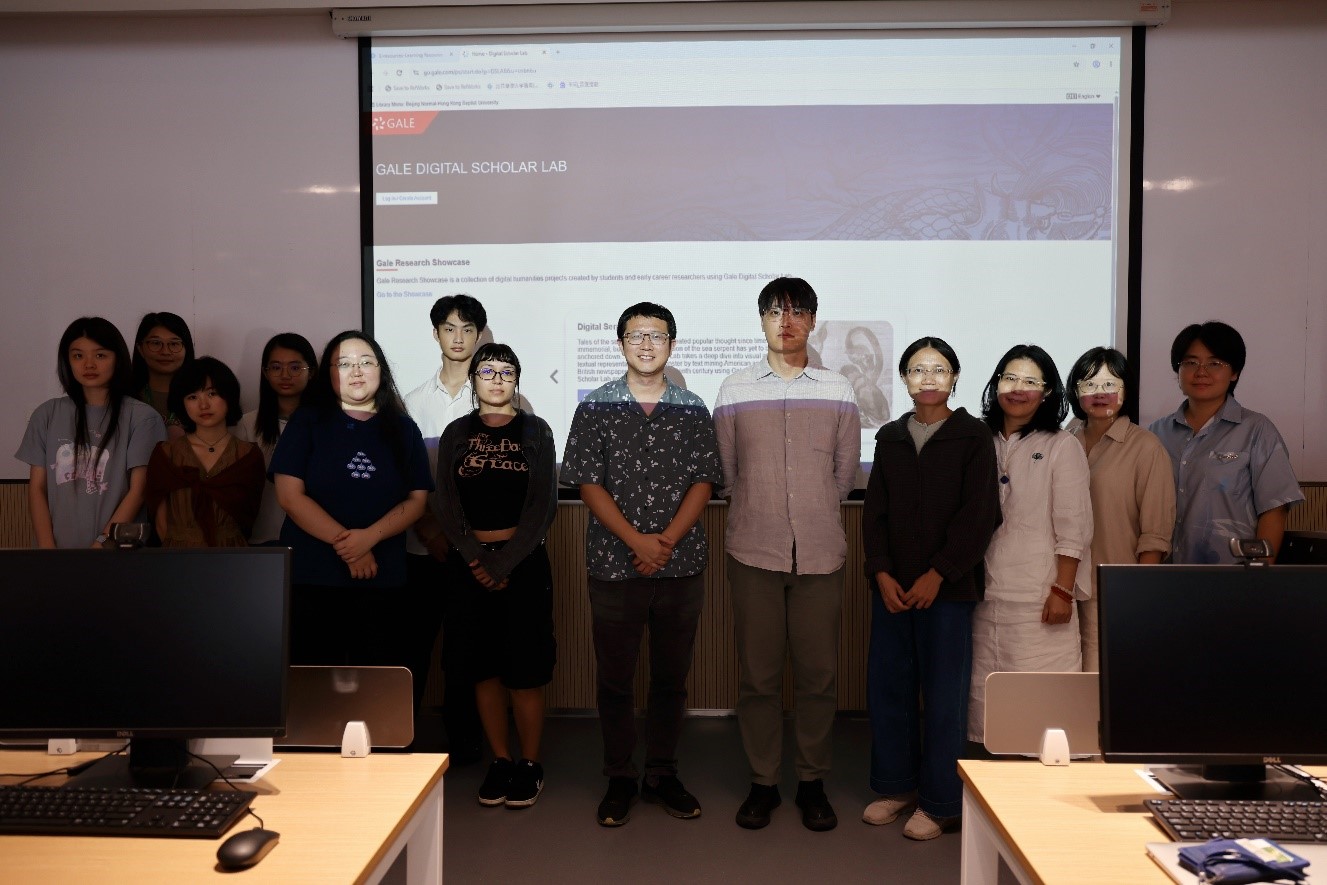
Picture: Group photo of participants
Contributors: Hui Qiu & Xi Xu
Photo: Hui Qiu.
©2024-2025 Beijing Normal-Hong Kong Baptist University(BNBU). All Rights Reserved.粤ICP备07509519号粤公网安备44049102496044.