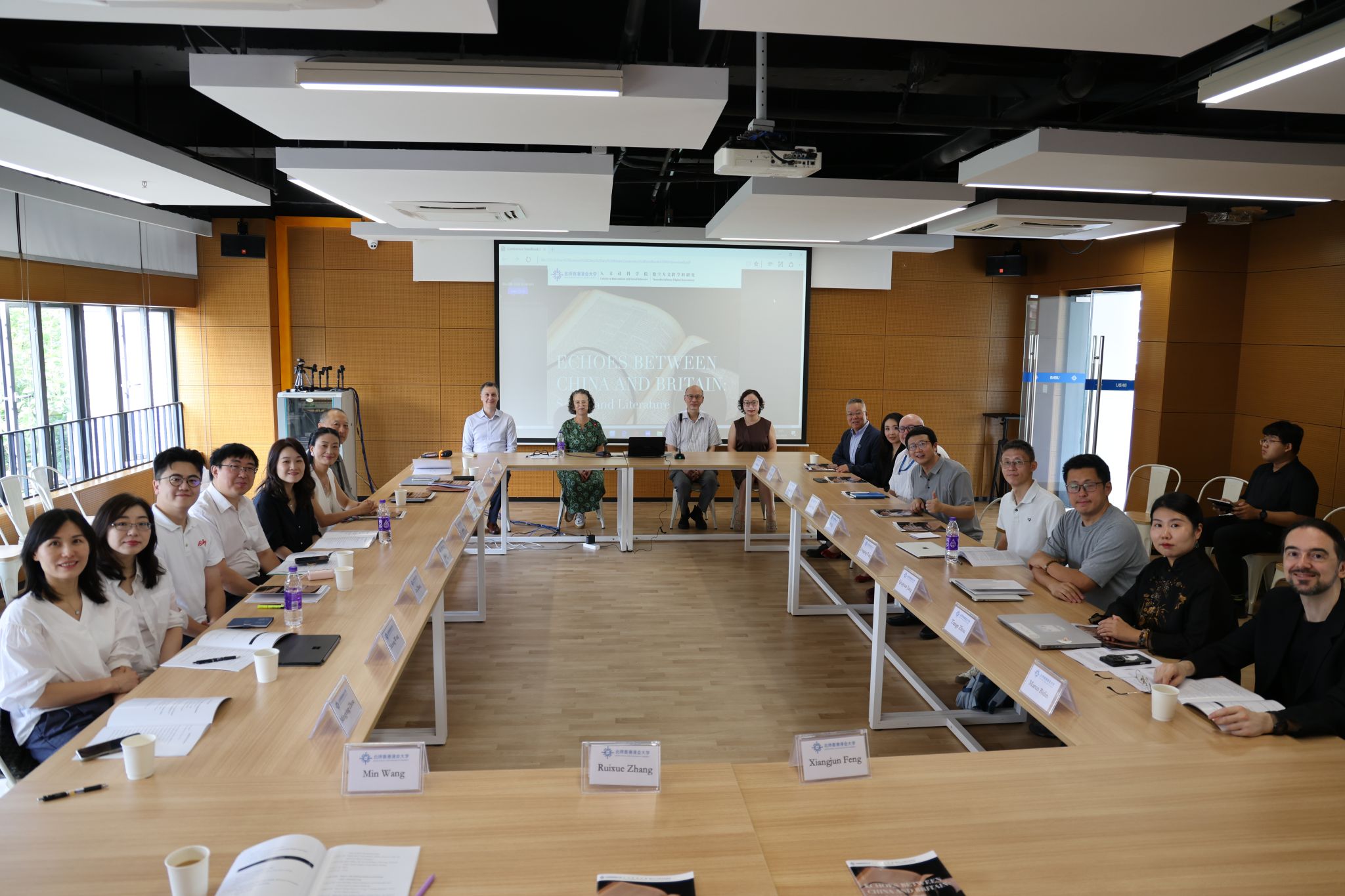
Group photo of participants
Conference Overview
On 21–22 September 2026, the transdisciplinary international conference "Echoes between China and Britain: Sound and Literature" was held at Beijing Normal–Hong Kong Baptist University (BNBU). This conference was convened by Dr. Xi XU, Associate Professor of the Department of Languages and Cultures, sponsored by his BNBU research project "Traveler and Sinologist: A Study of Reginald Johnston in China," and supported by the Transdisciplinary Digital Humanities (TDH) programme. Bringing together scholars from King's College London, Lingnan University, The Hong Kong Polytechnic University, the University of Macau, Macao Polytechnic University, Peking University, Beijing Normal University, Beijing Institute of Technology, China University of Political Science and Law, Shanghai Jiao Tong University, Shandong University of Finance and Economics, Hubei University, Shenzhen University, Sun Yat-sen University, Guangdong University of Foreign Studies, the Xinghai Conservatory of Music, and BNBU, the two-day conference engaged in cross-disciplinary dialogue on five thematic panels: media technology and sound; Sino-British intellectual exchange; the sonic translation, reception and diaspora; music and narrative form; and noise and utopia in modern China.
Keynote Address
The keynote speech, "Modernist Noisescapes: Writing Sound in Interwar Britain," was delivered by Professor Anna Snaith of King's College London, and moderated by Dr. Xi Xu. This speech is based on Prof. Snaith’s latest monograph: Writing Noise in Interwar Britain ( Oxford University Press, 2025). Taking Aldous Huxley's notion of an "age of noise" as her starting point, Professor Snaith examined the interwar British preoccupation with noise: the Anti-Noise League, founded in 1933, was the first to frame noise as a public health issue, treating it as both a synonym of modernity and a symptom of the deleterious effects of technological advance. She argued that this preoccupation constitutes a sonic legacy of the auditory bombardment of the First World War, whose extreme decibel levels prompted a reconceptualisation of the material effects of sound and rendered everyday urban din an object of urgent scrutiny. Through a close reading of Virginia Woolf's Mrs Dalloway — "a novel about noise" — she showed how the work simultaneously registers the healing, connective properties of sound and the experience of sound as physically injurious and traumatic, suggesting that literary fiction is both a key source of auditory history and a site where competing understandings of noise are rehearsed.
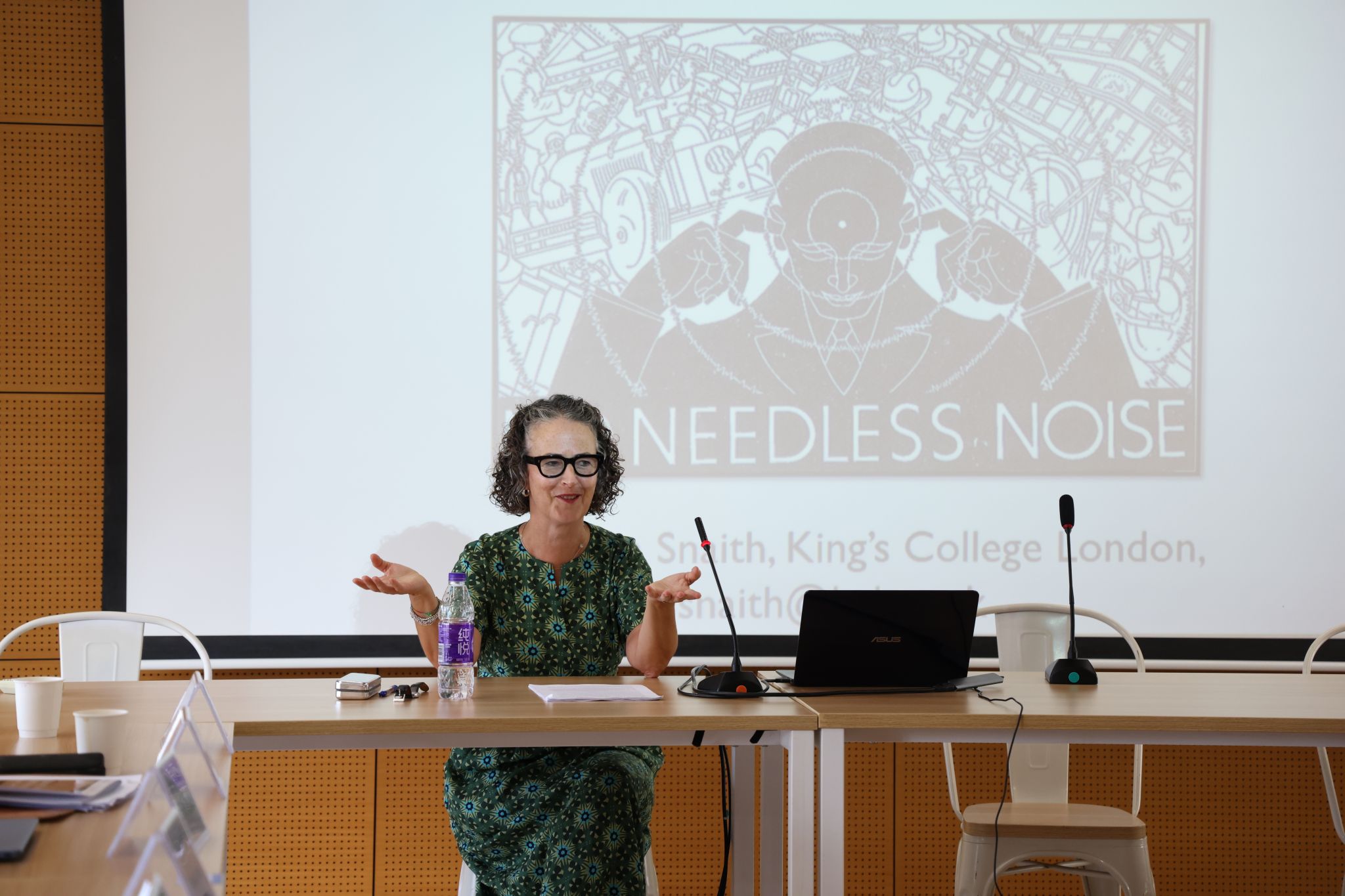
Professor Anna Snaith delivered the keynote speech
Panel Sessions
Panel 1 — Wired for Sound: Media, Technology, and the Voice
Chaired by Professor Li Li of Macao Polytechnic University, the first panel opened with Dr Yu Zhang, Associate Professor in the Department of Chinese History and Culture at The Hong Kong Polytechnic University, whose "Love Over the Wires: Telephonic Information in Late Qing and Early Republican China" examined the surge of writings triggered by the late-nineteenth-century introduction of the telephone: late-Qing writers depicted the device as a "spatial-temporal utopia" of "face-to-face talk" (mianyu) and "heart-to-heart talk inside a room" (yishi tanxin), while urban romances such as Xu Zhuodai's "Wireless Telephone" (1911) and Bao Tianxiao's "Telephone" (1914) explored the trope of "love over the wires," marking a shift from oral-auditory culture to a visual-tactile print mode that stored ephemeral sounds as written texts. Dr Tiange Zhou, Associate Professor and Director of the Art & Technology Lab at Beijing Normal University's School of Future Design, in "Dialect, Women's Talk, and Musical Culture in Shanghai," traced a century of women's voices in the city — through the writings of Eileen Chang, Wang Anyi, Su Qing and Jin Yucheng, alongside historical recordings, lyrics and broadcast archives — and proposed the notion of the "gendered remainder of auditory modernity" to ask, in an age when AI can synthesise any voice, whose voice we are hearing. Dr Marco Bidin, Associate Professor of Electronic Instrument Engineering at the Xinghai Conservatory of Music, in "The Text as Database: John Cage, Finnegans Wake, and the Origins of Algorithmic Reading," argued that Cage's mesostic structures and the tape-splicing in Roaratorio function as proto-digital extraction algorithms that treat Joyce's Finnegans Wake as an operable database, and demonstrated, through forensic signal processing of Joyce's 1929 voice recording, the material friction of human respiratory limits in the electroacoustic origins of digital textuality.
The panel charted how successive sound technologies — the telephone, the gramophone, magnetic tape, and the algorithm — have reshaped the perception, storage and exchange of information. Coming from history, literature and music technology, the three speakers converged on a shared question: new media are not only containers of sound but also continuously rewrite the relationship between humans, sound, text and listening.
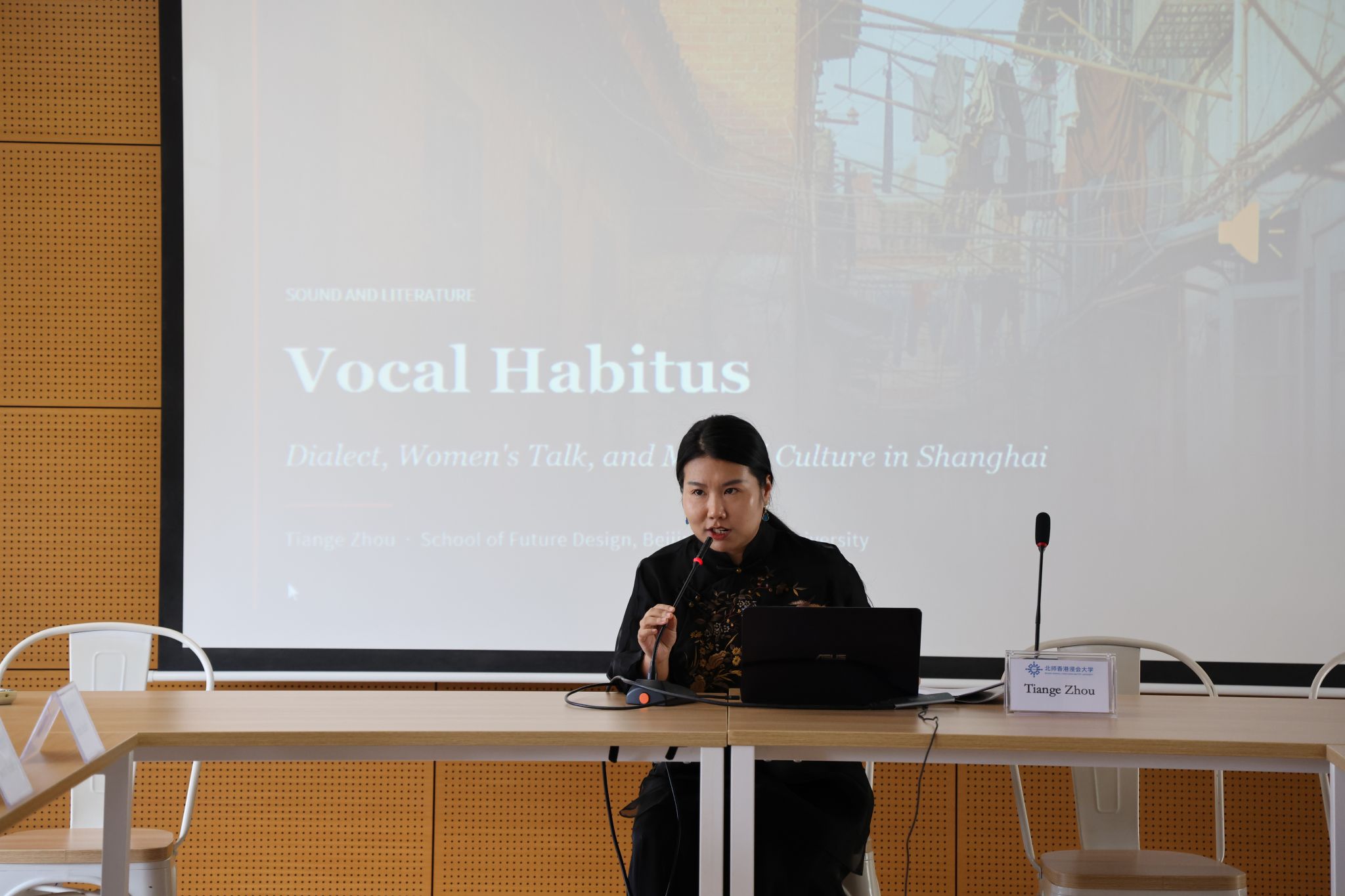
Associate Professor Zhou Tiange delivered a speech
Panel 2 — Sino-British Intellectual Exchange
Chaired by Professor Dongqing Wang of Guangdong University of Foreign Studies , the second panel opened with Professor Jason Harding, Head and Professor of English at Lingnan University, whose "Chinese Mandarins and Cambridge Dons: Echoes between China and Britain" traced twentieth-century Sino-Cambridge exchange from Xu Zhimo's 1920s sojourn and his encounters with Goldsworthy Lowes Dickinson and Bertrand Russell to I. A. Richards's teaching at Tsinghua and William Empson's at Peking University, where their students went on to shape the discipline of foreign literary studies in China. Dr Ruixue Zhang, Assistant Professor of English at BNBU, in "Echoes of 'Song': Christina Rossetti's 'Song' and Its Chinese Afterlives," tracked the Victorian poem from its drawing-room performance through Xu Zhimo's 1928 New-Culture translation to Luo Dayou's re-mediation within the 1970s Taiwan Min'ge movement, reading these "afterlives" — drawing on Andrew F. Jones's concept of the "listening circuit" — as successive acts of sonic and cultural reform. Dr Qingyuan Jiang, Assistant Professor of English at Peking University, in "Writing England, Writing China: The Wartime Aesthetics of Xiao Qian and Chiang Yee, 1940–1945," examined how the two Chinese writers exiled in wartime England consciously turned away from the apolitical modernist tastes of their formative years and embraced nineteenth-century realism to serve the cause of wartime China, only to find that the resulting overlap of realism and modernism complicated the propagandist aims of their writing.
The panel mapped the contours of Sino-British intellectual and literary encounter. Whether through the personal networks linking Cambridge dons and Chinese mandarins, the cross-cultural journey of a Victorian lyric, or the wartime writings of Chinese exiles, the speakers showed that "echoes" are never unidirectional: they are continually remade through return and reception.
Panel 3 — Sonic Translation, Reception, and Diaspora
Chaired by Professor Xiaoyi Zhou of Peking University, the third panel opened with Professor Li Li of Macao Polytechnic University, whose "Sound in Scottish Poetry and its Translation" analysed three Scottish poems — Edwin Morgan's "The Loch Ness Monster's Song" and "Canedolia," and Sorley MacLean's "Dawn" — to compare how their sound effects, including onomatopoeia, alliteration and Gaelic music, survive or fail to survive in Chinese translation. Professor Charles Lowe, Head and Professor in the Department of Languages and Cultures at BNBU, in "Self-Development, Inaction, and Influence: Oscar Wilde's Chuang Tzŭ and The Picture of Dorian Gray," placed Wilde's 1890 review of Herbert Giles's translation of Chuang Tzŭ alongside The Picture of Dorian Gray, arguing that the Taoist concept of "inaction" illuminates the novel's suspicion of influence and its conception of aestheticism, while also lending Wilde's literary aesthetic a political edge in his critique of English intervention in Ireland. Professor Jia Xu, Vice Dean and Professor at the School of Foreign Languages, Beijing Institute of Technology, in "Shakespeare in the 'Seventeen Years': Perspectives, Paradigms, and Readership in Chinese Academic Journals," read 1949–1966 Chinese academic journals to examine the localised practice of Marxist Shakespeare criticism, the influence of the Soviet-centred discursive model, and the prominent role of "Letters from Readers" in shaping post-1949 literary production and consumption.
The panel traced how sound and text are transformed in translation, reception and cross-cultural travel. Moving from Scottish poetry, through the westward journey of Taoist ideas, to the institutional history of Shakespeare studies in China, the speakers made a common case that translation is never merely linguistic conversion but the search for resonance in another sonic and cultural world.
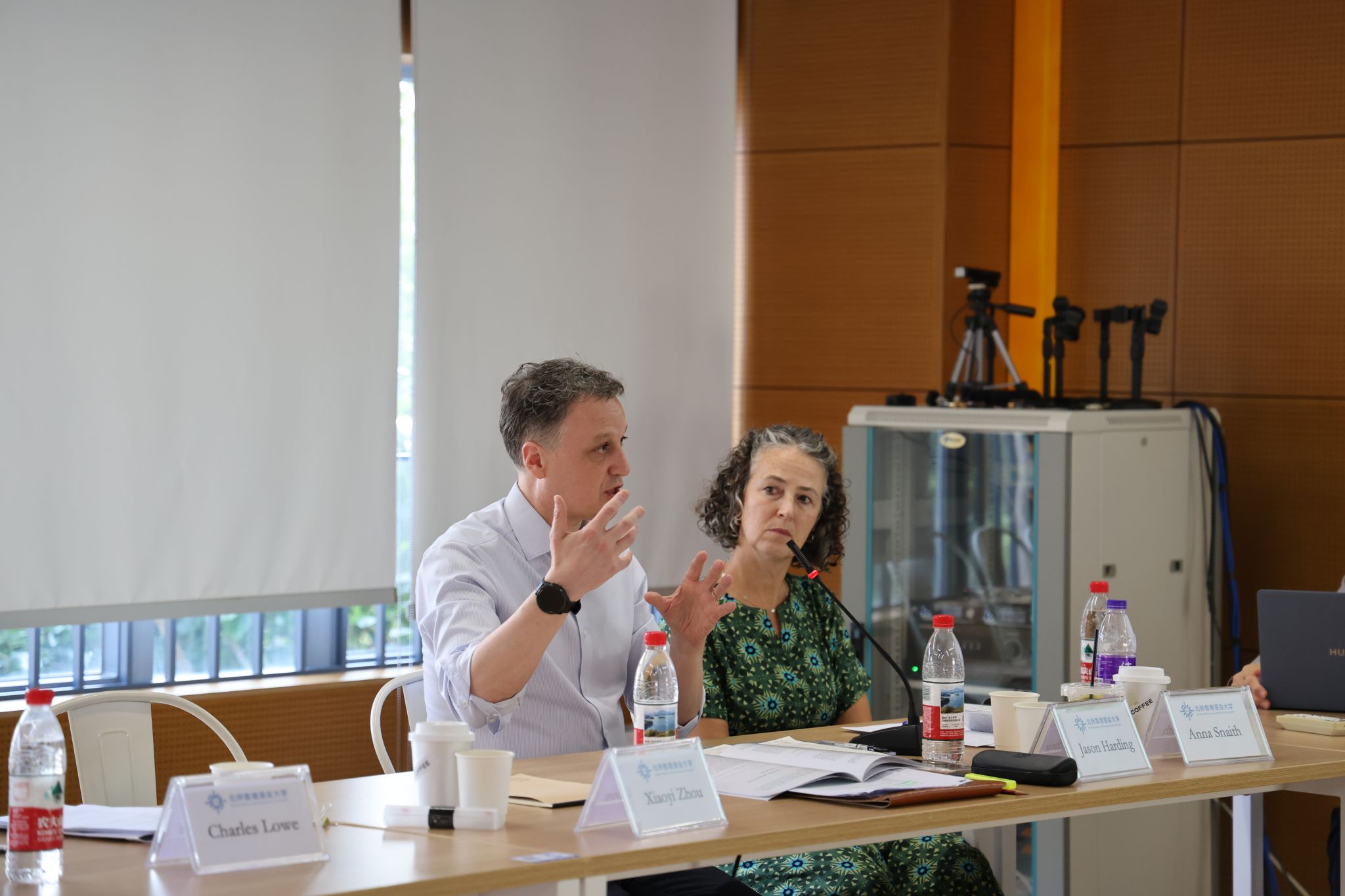
Q &A Session
Panel 4 — Sound, Music, and Narrative Form
Chaired by Professor Jia Xu of Beijing Institute of Technology, the second day began with Professor Lei Zhang of the China University of Political Science and Law, whose "Beyond the Absolute: Meaning, Narrative, and the Uses of 'Absolute Music'" challenged the myth of "absolute music" by reading instrumental music in Virginia Woolf's The Voyage Out, E. M. Forster's Howards End and Stanley Kubrick's A Clockwork Orange, arguing that music, though resistant to verbal paraphrase, persistently acquires meaning and narrative possibility — and that the insistence on its purity may itself be a historically specific mode of listening and cultural distinction. Associate Professor Xichong Wang of Hubei University, in "When Scientific Discourse Becomes White Noise: Auditory Occlusion and Redemption in Double Blind," read Edward St Aubyn's 2021 novel through the concept of digital white noise, identifying the perceptual priority of vision over hearing, the semantic obstruction produced by scientific discourse, and two contrasting modes of auditory redemption within the novel. Dr Bowen Wang, Assistant Professor of English at Shanghai Jiao Tong University, in "Jazzing Detection: Sonic Activism in Mongo Beti's Crime Fictions," read Mongo Beti's late detective novels as a site of "sonic activism," in which jazz's improvisatory, syncopated and call-and-response structures are re-functioned as narrative techniques that disrupt the genre's hermeneutic transparency and reveal detection itself as a contested epistemological practice under postcolonial conditions. Dr Min Wang, Lecturer at Shandong University of Finance and Economics, in "After the Explosion: 'Kay Arr' and the Recalibration of Listening in Mrs Dalloway," argued that Woolf constructs the development of Septimus Smith's listening through two sequenced events — the motorcar's explosion and the nursemaid's "Kay Arr" — and that the novel thereby represents trauma not as a static auditory condition but as a contested process in which listening is gradually recalibrated from vigilance back toward sensation, relation and everyday life.
The panel examined how sound and music actively participate in the construction of literary and cinematic narrative. Spanning British modernist fiction, the contemporary Anglophone novel, and postcolonial francophone writing, the four papers made a common case that music and sound are never mere atmospherics but a generative formal and epistemic force.
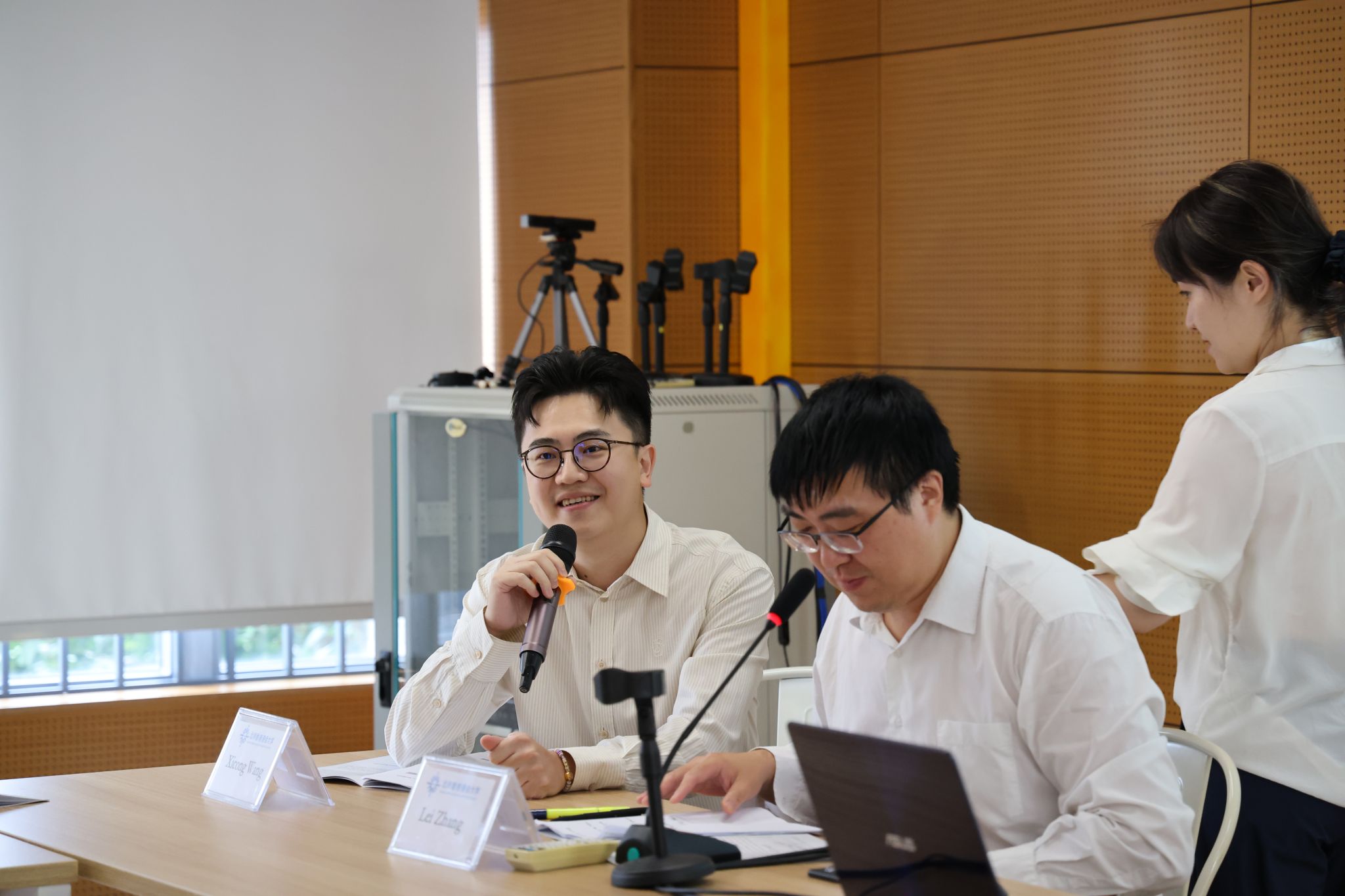
Q&A session
Panel 5 — Noise, Opera, and Utopia in Modern China
The final panel was chaired by Assistant Professor Ruixue Zhang of BNBU. Dr Xiangjun (Sean) Feng, Assistant Professor of Chinese Literature at the University of Macau, in "Radio, Noise, and the Father of Modern Chinese Literature," re-read Lu Xun's critique of radio through an "informatic" understanding of noise — noise not as unpleasant sound but as a signal-to-noise problem — arguing that Lu Xun's animus toward radio bespeaks an "informatic anxiety" about modern Chinese culture, a reading he pursued through the early essay "Toward a Refutation of Malevolent Voices" (Po esheng lun). Dr Mingying Zhou, Assistant Professor at Shenzhen University, in "'Ritual Bones' and 'Modern Skin': Institutional Patronage, Spatial Negotiation, and the Digital Spectacularization of Xinchang Diaoqiang Opera," drew on multi-sited ethnography and archival research on the 600-year-old Xinchang Diaoqiang opera to identify three interlocking dynamics — an 80/20 government-patronage model, the genre's spatial relocation from village ritual to urban stage, and the digital spectacularisation of the Mulian ghost plays — and argued that the genre's endurance depends on the constant, often discordant negotiation between "ritual bones" and a "modern skin." Professor Dongqing Wang of Guangdong University of Foreign Studies, in "The Echo-Chamber of Orientalism: Shangri-La and Archaeologies of Utopia," traced Shangri-La from James Hilton's Lost Horizon (1933) to the 2001 renaming of Zhongdian into Shangri-La, showing how the brand has functioned as a century-long "echo-chamber" of Orientalist fantasy between China and the West, and how China has appropriated Orientalist knowledge to forge its own cultural capital in the global market.
The panel turned attention to the sonic landscape and spatial politics of modern China. From Lu Xun and radio, through the contemporary fate of a regional opera, to the commodification of Shangri-La, the three papers together charted the ongoing negotiation between noise and order, tradition and modernity, Western imagination and local identity.
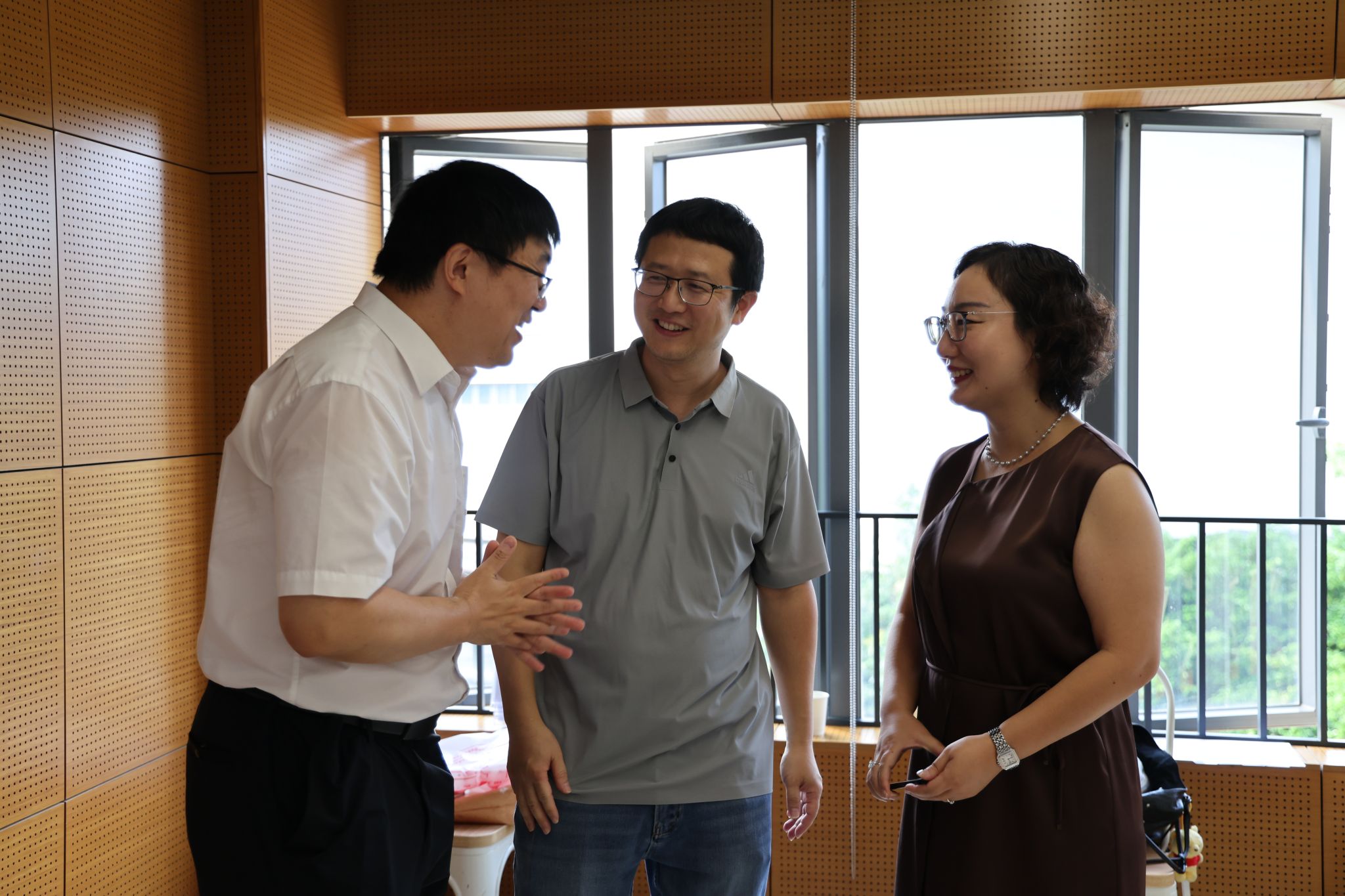
Scholar's discussion
Concluding Remarks
In his closing remarks, Dr Xi Xu thanked the speakers and participants for their contributions. He also expressed his sincere appreciation for the strong support from the Research Development and Knowledge Transfer Office (RDKTO) and the Faculty of Humanities and Social Sciences (FHSS). Framing the conference around "Echoes between China and Britain," the two-day conference placed the history of sound, media technology, literary studies, translation studies, musical narrative and heritage research in a common conversation: from the late-Qing telephone and the cross-cultural journey of a Victorian lyric to Mrs Dalloway's noise and trauma, "sound" was both the object of inquiry and a method that traverses literature, history, music and the digital humanities. Through cross-linguistic, cross-medial and cross-disciplinary discussion, the conference not only presented the latest research in sound and literary studies but also offered a fresh academic perspective on the historical continuities and contemporary resonances of Sino-British cultural exchange.
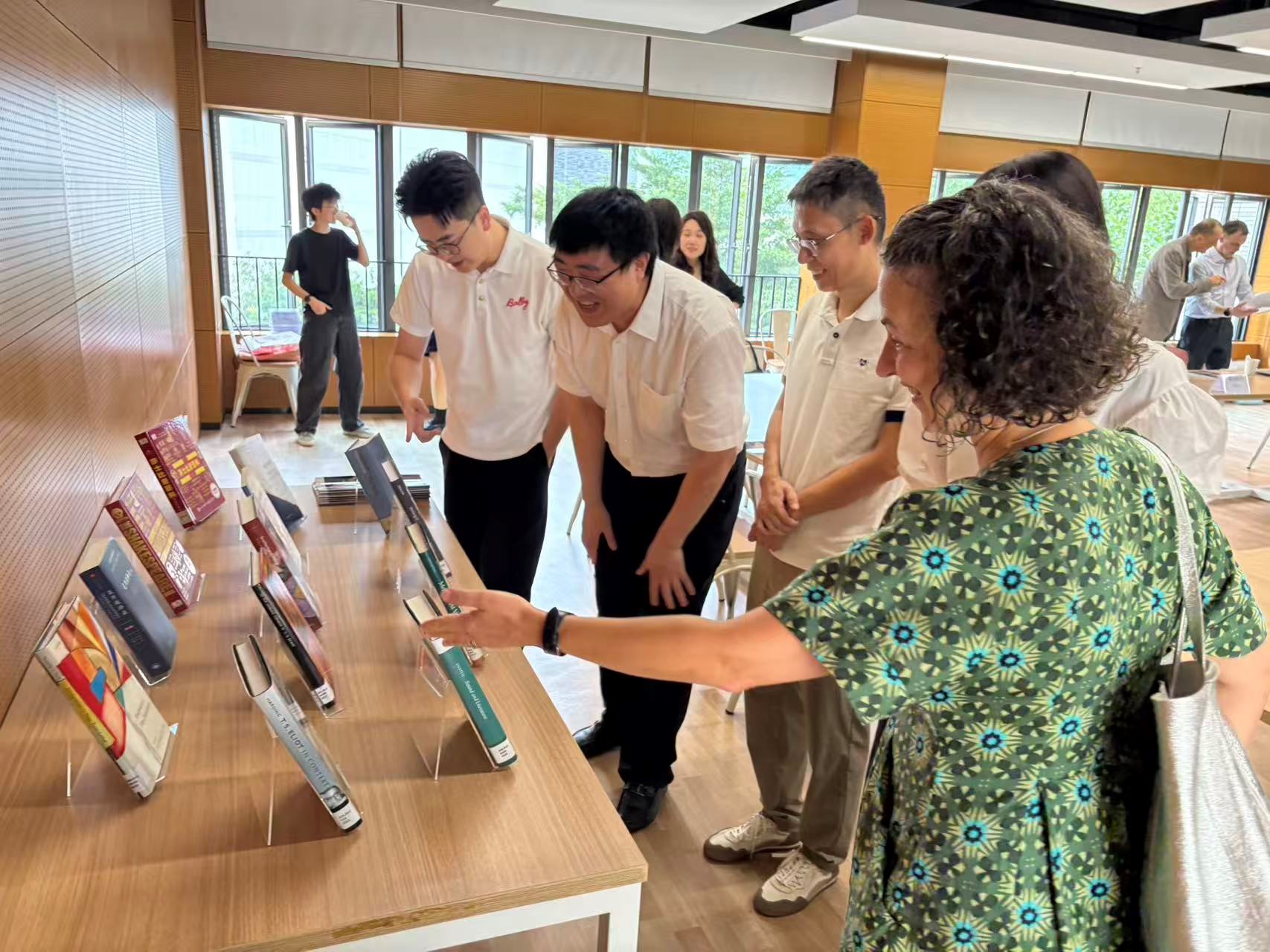
Book Exhibition of Conference Participants
Reporter: Xintong Chen
Picture: Conference Team
Proofreader & Editor: Xi XU
©2024-2025 Beijing Normal-Hong Kong Baptist University(BNBU). All Rights Reserved.粤ICP备07509519号粤公网安备44049102496044.