On 15 September, 12:00–13:30, the first lecture in the Transdisciplinary Digital Humanities Lecture Series was held in T2-101. Dr. Yegor Grebnev, Associate Professor at Beijing Normal University-Hong Kong Baptist University (BNU-HKBU), gave a talk titled "The Limits of AI: Examples from Humanities Scholarly Publishing." He opened up the editorial backend of the Oxford journal Manuscript and Text Cultures for the audience and addressed a very practical question: How much work can AI actually do for editors?
Without AI: How a Journal Comes Together
Producing an academic journal is far more tedious than one might imagine.
An author submits a Word manuscript. The team uses Pandoc to convert it into Markdown, stripping out redundant formatting such as fonts and font sizes and leaving only the content. The references are extracted separately and stored as a BibTeX database. Then comes manual proofreading, which takes one to two working days and focuses on the smallest details: an extra parenthesis, incorrect punctuation after an author's initials, confusion between the year of writing and the year of publication, or an author's name that follows Flemish rather than French spelling. After proofreading, citation keys still have to be inserted back into the main text one by one. Finally, the manuscript is run through LaTeX and compiled into a PDF.
The workflow is reliable, but exhausting. Editors can only do this kind of work for a limited number of hours a day before their brains stop cooperating. A huge amount of time is spent on repetitive work that offers little growth.
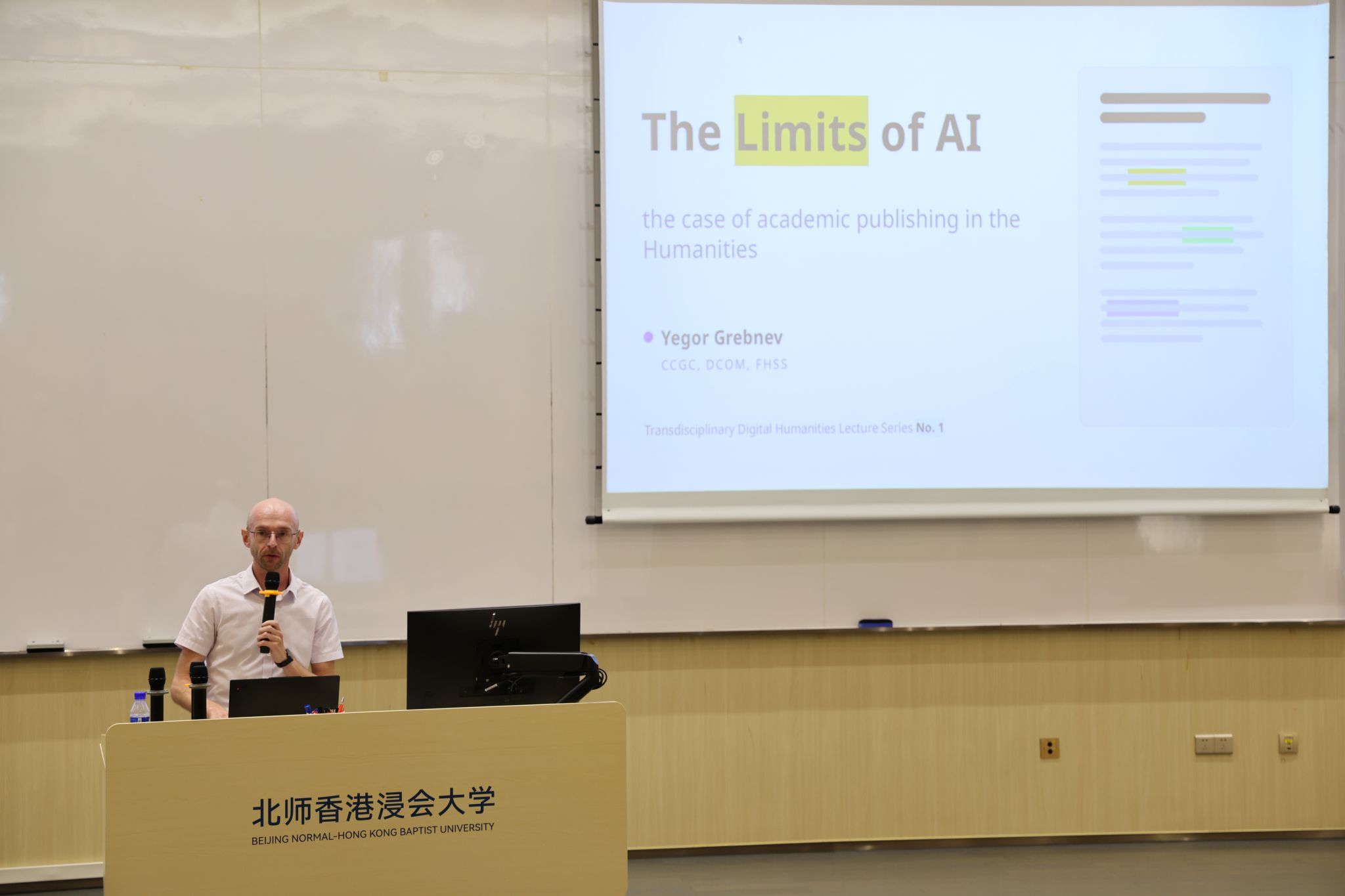
Dr Grebnev giving his lecture
Once AI Takes Over: What It Actually Does Better
Dr. Grebnev connected Claude to his local command line and issued a whole set of instructions with a long prompt. In practice, AI already outperforms humans on formatting-related tasks:
-Reference correction. It can verify information online and identify misspelled names. In one case, it determined that an author's name was Flemish rather than French and pointed out a spelling error in the original text. Such errors are hard for human editors to catch, since we do not know every author in a bibliography.
-Converting Word into clean Markdown.
-Generating reference libraries and adding metadata such as DOIs.
-Flagging obvious factual contradictions in the manuscript.
The processed references not only had no obvious errors, but also caught several issues that even manual proofreading would have missed. Technically, AI can already go from a raw Word file all the way to a fully typeset PDF.
But He Still Insists on Typing Citation Keys by Hand
Technically, AI can insert citation keys into the body text automatically, but Grebnev insists on doing it by hand.
His reasoning is simple: typing each citation by hand forces the editor to read the entire manuscript from beginning to end and to know exactly which book or article each citation refers to. Only after this step does the editor truly grasp the article's chain of argument.
If it is left to AI, even if the formatting is perfect, the editor has no idea how it chose each citation. Checking it afterwards would mean trying to guess AI's logic in reverse, which costs more and leaves the editor without a real grasp of the text. Saving time at the cost of understanding is not a good trade for a humanities journal editor.
His Rule of Thumb: Is This Making Me Better, or Just Draining Me?
Grebnev offered a practical rule of thumb. Before taking on any task, ask yourself:
"Is this helping me grow, or is it just draining me?"
Tasks that build your abilities—creative layout design, understanding the logic of an argument, making scholarly judgments—are worth doing yourself, even if they take time.
Purely repetitive tasks that do not help you grow—bulk-checking punctuation errors, standardizing formatting, fixing spelling—can be handed to AI, with humans only reviewing the results.
Both extremes are dangerous: do everything yourself, and you will be drained by meaningless repetitive work; outsource everything, including thinking and learning, to AI, and you will gradually lose your ability to judge independently—what he calls brain rot.
Dr. Grebnev also had a direct piece of advice for students: the boundaries of a task depend on your goal. If you just want to deliver a finished product, you can confidently use AI. If you want to learn, build skills, and create something that is truly your own, then even if it can be automated, it is worth doing by hand.
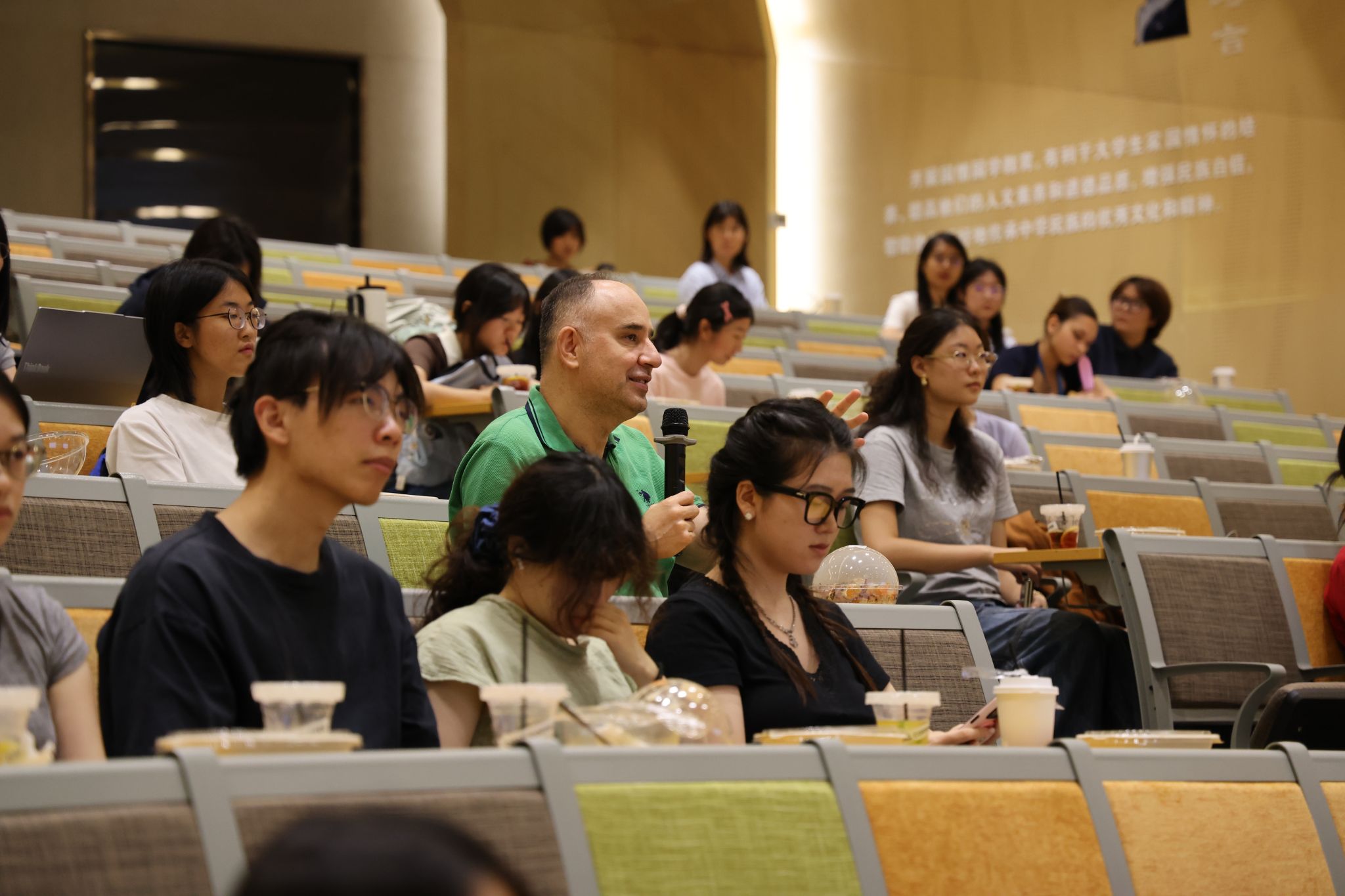
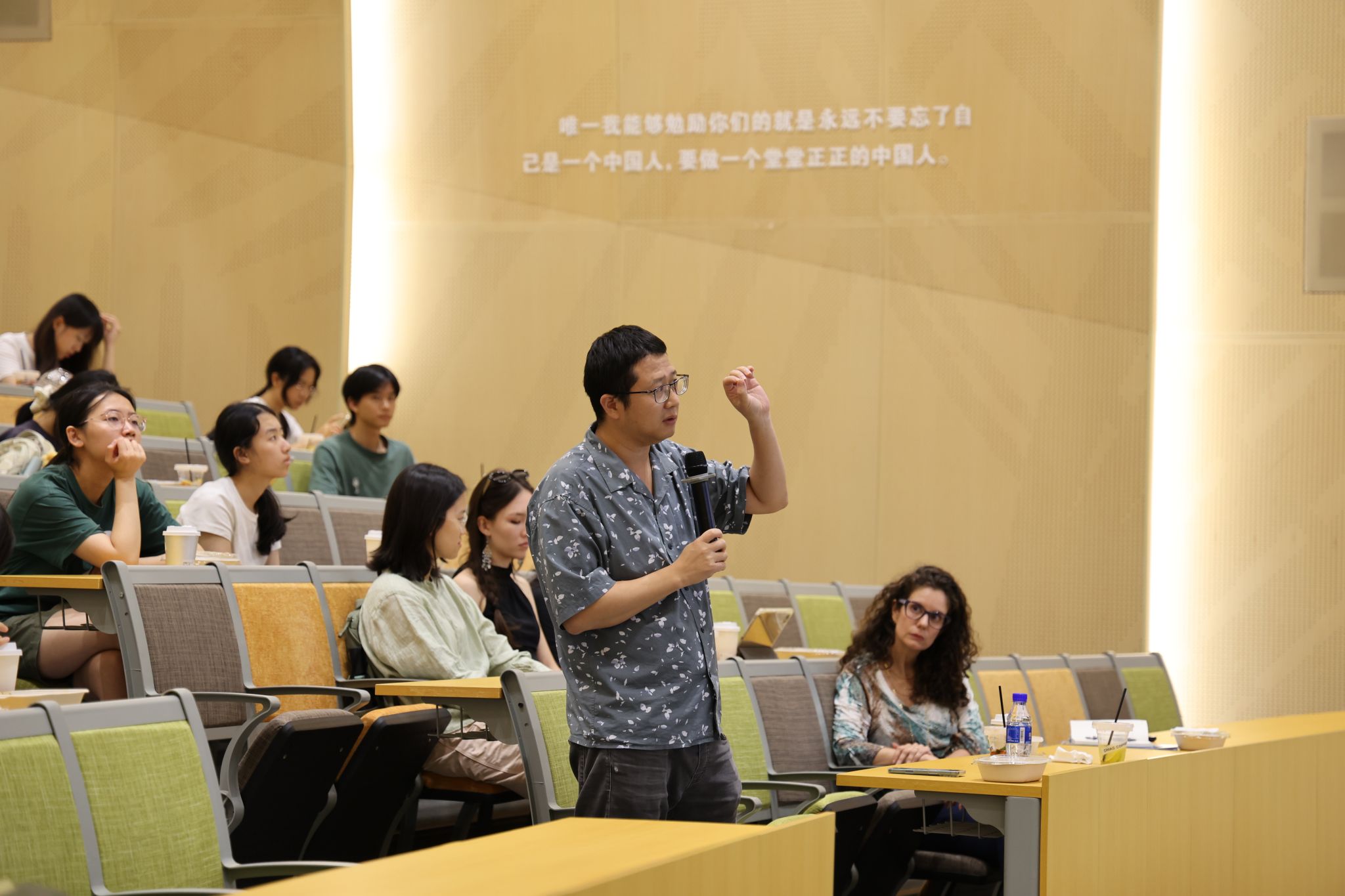
Audience members asking questions after the presentation
The Transdisciplinary Digital Humanities (TDH) Lecture Series will continue to invite speakers from different fields. Stay tuned for upcoming sessions.
Report writing & photos: Xintong Chen
Editing: Xi XU
©2024-2025 Beijing Normal-Hong Kong Baptist University(BNBU). All Rights Reserved.粤ICP备07509519号粤公网安备44049102496044.