The 3rd International Symposium on Humanities and Culture
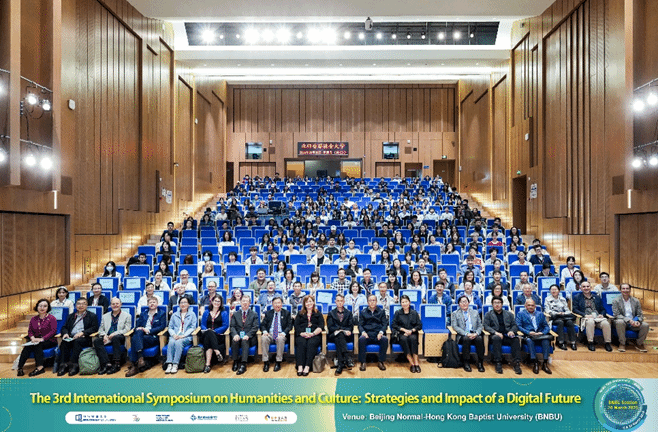
On March 18 and 20, 2026, BNBU and HKBU jointly organized the “3rd International Symposium on Humanities and Culture: Strategies and Impact of a Digital Future.” The conference began in Hong Kong on the 18th and continued in Zhuhai on the 20th. On both days, staff, faculty, and students from both universities came together.
In his opening speech, Prof. Patrick Chau, Provost of BNBU, elaborated on the shared conviction that higher education must connect technological advancement with humanistic insight. This symposium, he noted, embodied that vision.

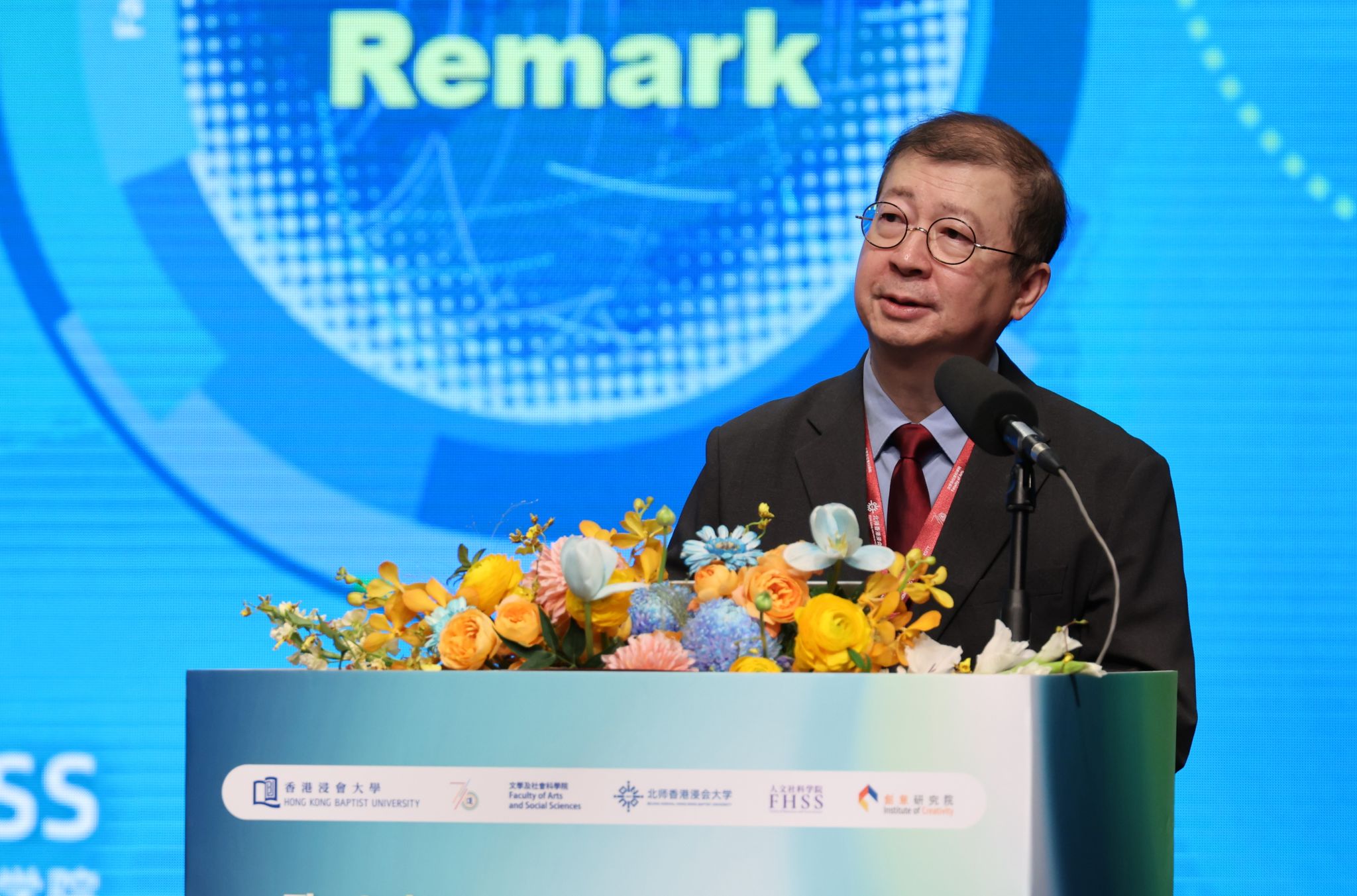
(BNBU Provost Prof. Patrick CHAU and HKBU FASS Dean Prof. Daniel LAI)
The morning featured a roundtable discussion with five internationally renowned guest speakers: Prof. Neil Selwyn from Monash University, Prof. Cecily Raynor from McGill University, Prof. Meredith Martin from Princeton University, Prof. Pieter Francois from the University of Oxford, and Prof. Julian Thomas from RMIT University. The conversation centered on the social, ethical, and policy implications of technology, with Prof. Beibei Tang, Dean of the Faculty of Humanities and Social Sciences, as moderator.
Panelists explored a range of pressing themes, beginning with the relationship between the humanities and AI. They emphasized that the humanities offer essential tools for grappling with the ethical discomfort of emerging technologies. The discussion also turned to AI and inequality, with speakers highlighting that while technology can empower marginalized groups, it also creates new forms of digital inequality, particularly for communities in the global South who risk losing not only jobs but also their voices in datasets that exclude them. Finally, panelists offered forward-looking insights for students, reminding them that technologies are built by people. Therefore, we need to start considering who they are built for, and recognize that students themselves are the generation that will shape the future of AI.
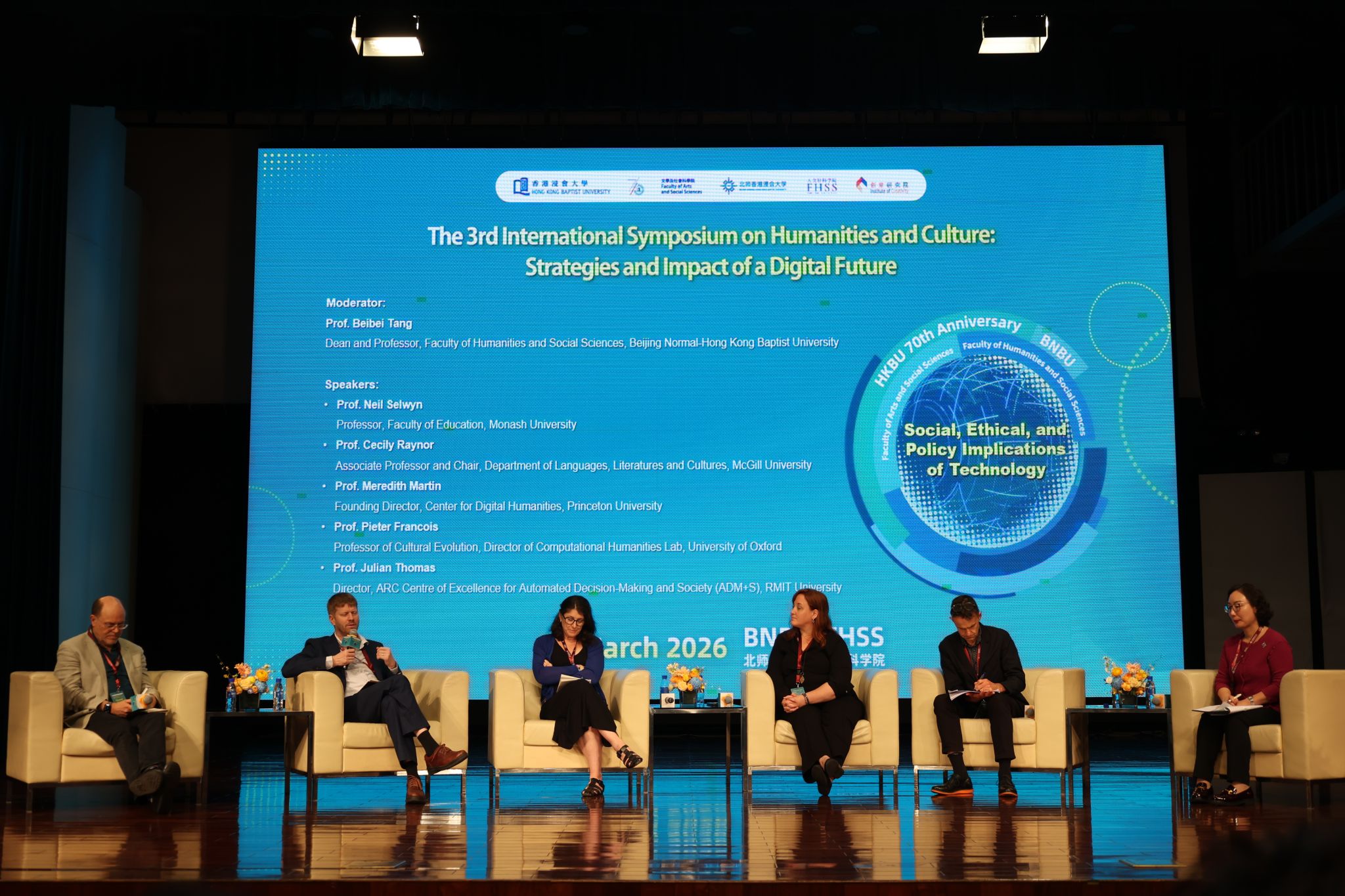
(Panelists, Prof. Selwyn, Prof. Raynor, Prof. Martin, Prof. Francois, and Prof. Thomas).
Following this panel, presentations focused on how the educational sector can respond to the advancement of digital technologies. Prof. Zhong Chen introduced BNBU's newest academic faculty: the School of AI and Liberal Arts. The School emphasizes not only technical skills such as coding but also creative and humanistic values, preparing students to thrive alongside AI and apply their knowledge for the benefit of society.
This idea reflected what Prof. Indika Liyanage shared: “Humanities should be at the heart of our digital future.” He added that with AI, we need to think about whom we are using technology for and for what purpose, questions that are central to the humanities and social sciences.
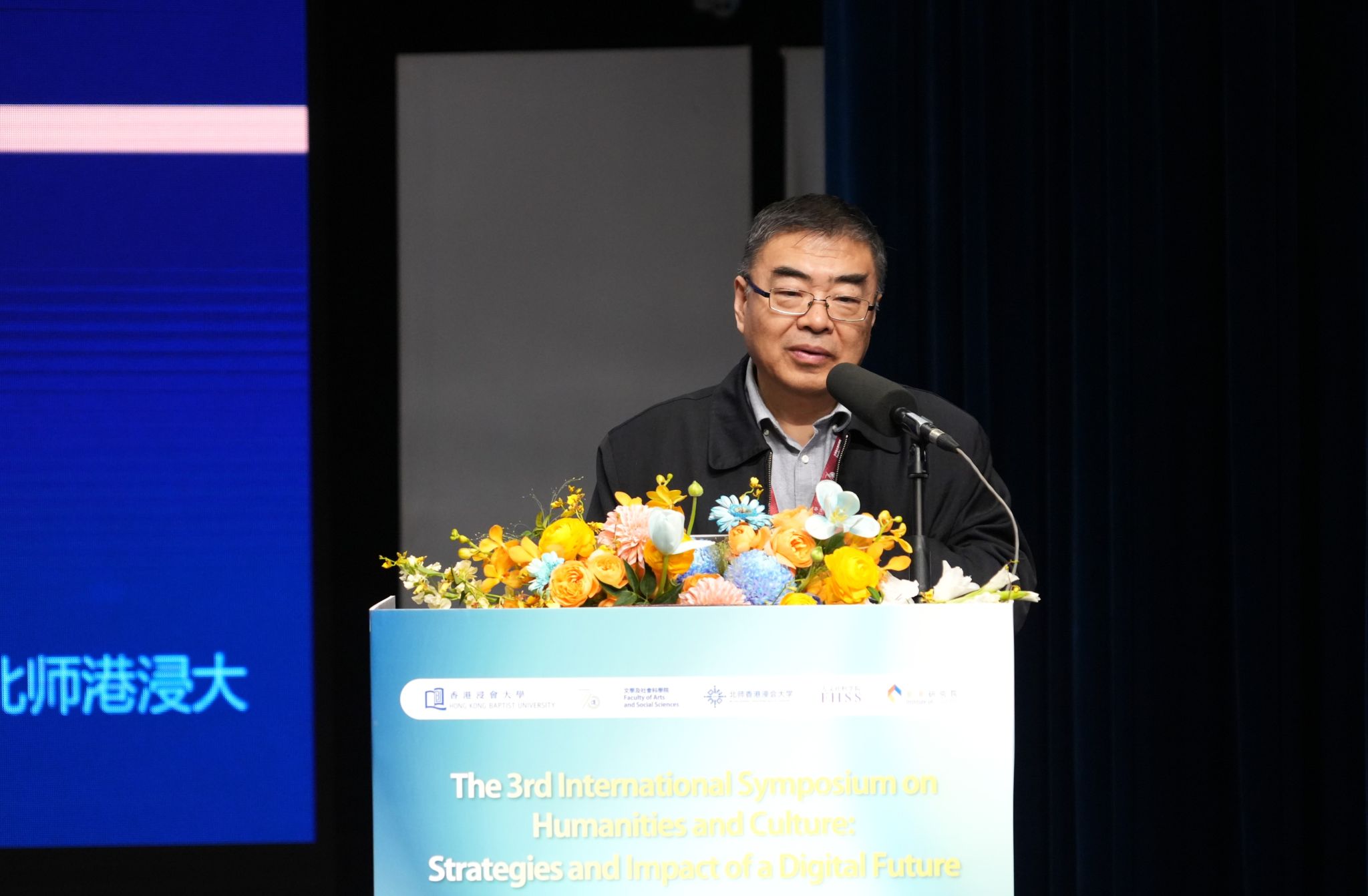
(Prof. Zhong Chen, Dean of SAI)
To conclude the event, a dialogue session was held between HKBU and BNBU students. Topics ranged from digital inequality, academic integrity, to social media and mental health, and digital literacy. Students demonstrated critical thinking in weighing the pros and cons of technology and brainstormed solutions to some of the challenges. Examples included organizing workshops to increase AI literacy, creating AI handbooks, and establishing support for mental health on campus.
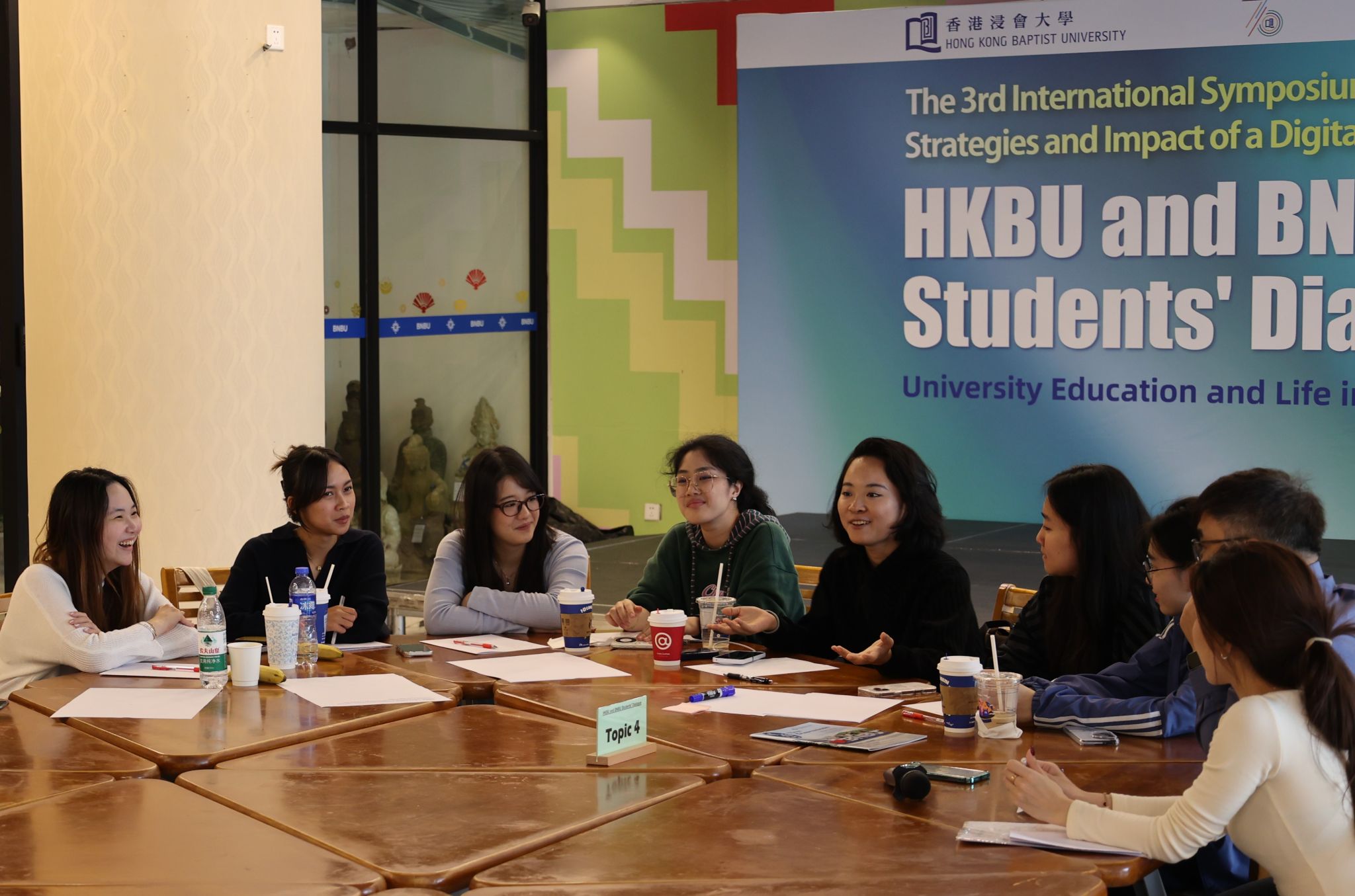
(Students from BNBU and HKBU)
