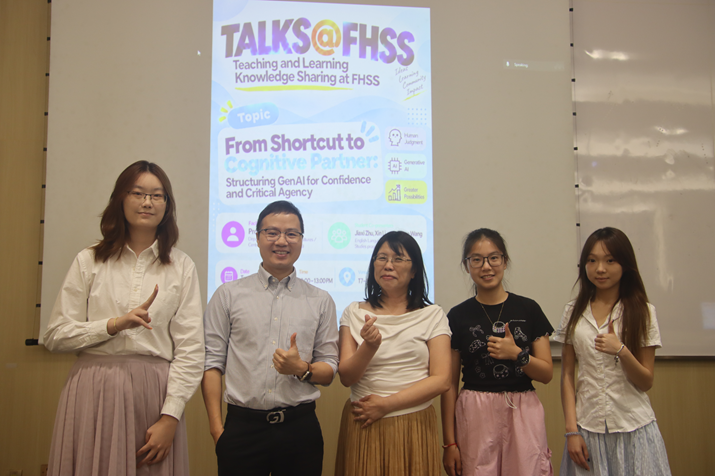
TALKS@FHSS Inaugural Session Explores GenAI as Cognitive Partner in Learning
The inaugural session of TALKS@FHSS, a new teaching and learning knowledge sharing series launched by the Faculty of Humanities and Social Sciences (FHSS) of Beijing Normal-Hong Kong Baptist University, was successfully held on September 29 with a discussion on how generative artificial intelligence (GenAI) can support students’ confidence while strengthening their capacity for independent, critical judgement.
Chaired by Dr. Wan Tenglong, Acting Assistant Dean for Teaching and Learning of FHSS, the session explored the theme “From Shortcut to Cognitive Partner: Structuring GenAI for Confidence and Critical Agency”. Prof. Edith Yan from the Department of Languages and Cultures led the session alongside three student co-presenters: Jiaxi Zhu, Xin Li and Xinyue Wang from the English Language and Literature Studies programme.
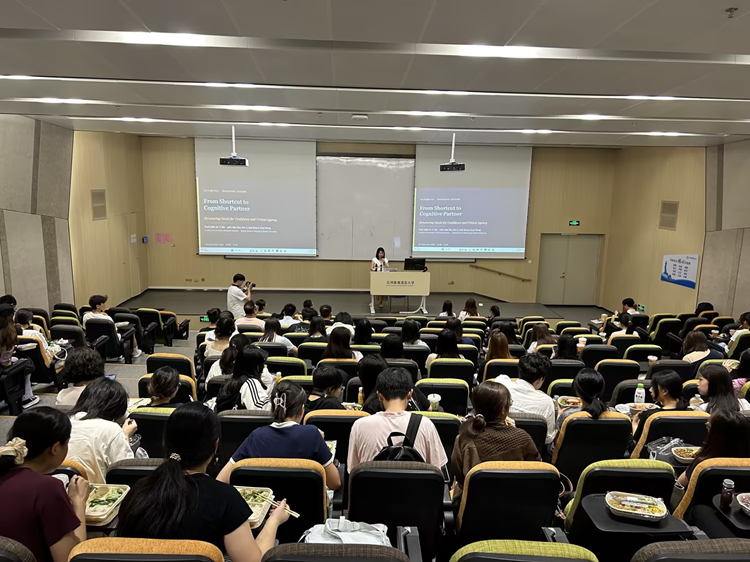
In his opening remarks, Dr. Wan introduced the TALKS@FHSS initiative as a monthly open forum bringing together students, academic staff and professional services staff to exchange ideas on teaching, learning and the student experience. With formats ranging from workshops and roundtables to dialogues, the series aims to move beyond one-way lectures and involve students in shaping topics, designing activities and co-leading sessions.
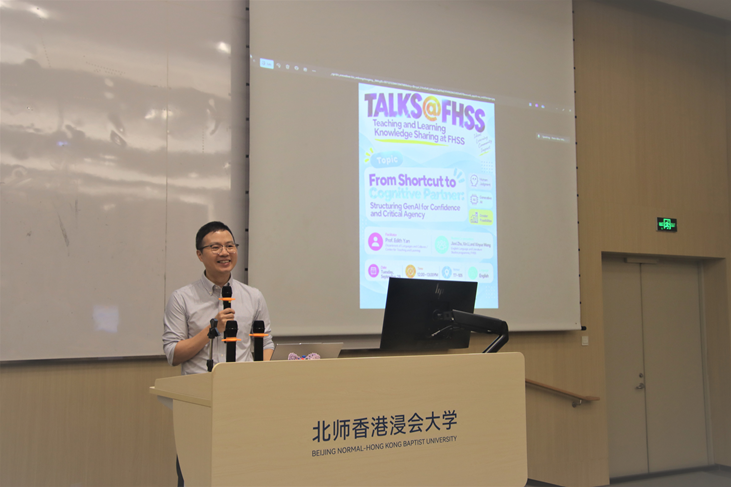
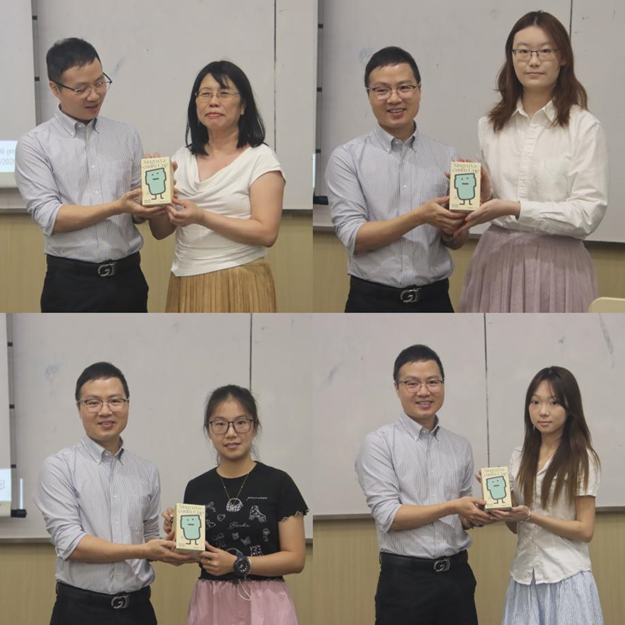
Keeping critical thinking at the centre of AI-assisted learning
Prof. Edith outlined a pedagogical framework designed to help students use GenAI without bypassing the intellectual work essential to learning. She distinguished between assessment of learning, which measures outcomes; assessment for learning, which uses feedback to guide improvement; and assessment as learning, in which students develop their judgement by monitoring and evaluating their own work.
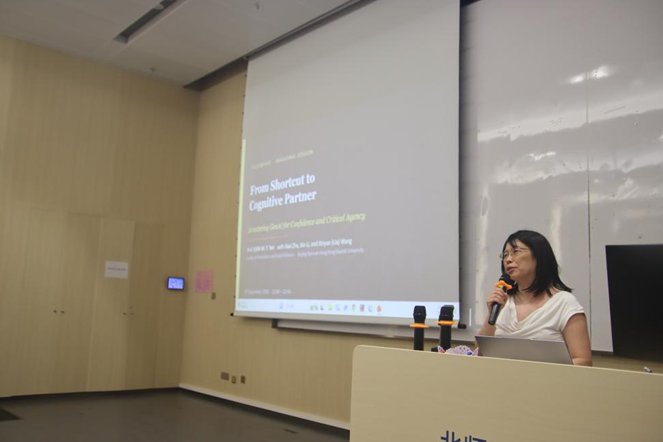
She proposed a four-stage process: using AI to generate an initial draft; critically evaluating it against the course context; revising it and explaining the changes; and testing the resulting work in real-world interactions. She emphasised that this final stage remains essential to judging whether AI-assisted work meets learners’ needs.
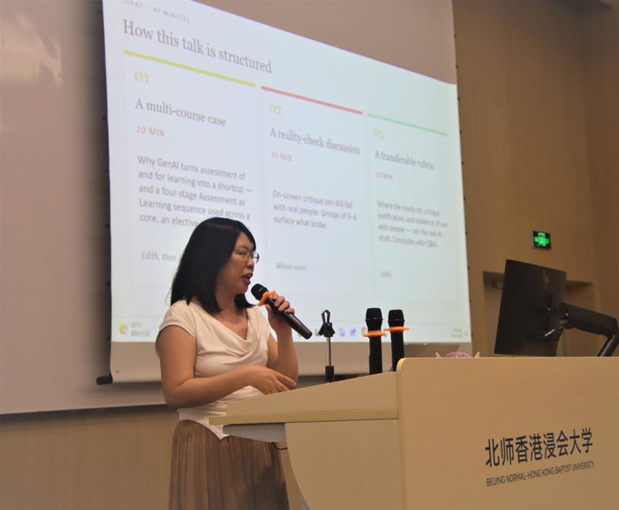
Drawing on her research, Prof. Yan reported that GenAI could ease the anxiety of starting from a blank page and build students’ confidence. However, checking fluent but inaccurate outputs placed additional demands on their attention. Students also learned to treat AI as a junior collaborator rather than an authority, rejecting suggestions that were too generic, culturally inappropriate or impractical for classroom use.
Students share lessons from classroom practice
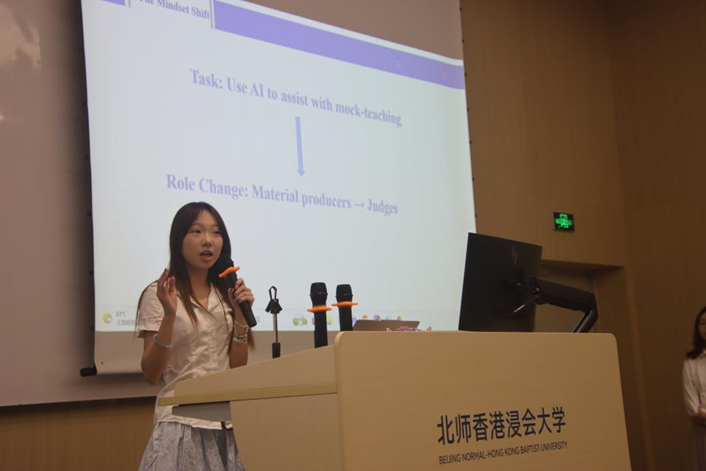
The three student co-presenters reflected on their first-hand experiences of using GenAI in their TESOL courses. They described a role shift from "material producers" to "critical judges": while AI could generate draft lesson plans and materials, human judgment on learner suitability, pedagogical fidelity and real-class feasibility remains irreplaceable. They also shared practical strategies: using AI for brainstorming, maintaining a critical mindset toward all outputs, and refining prompts based on real-world feedback.
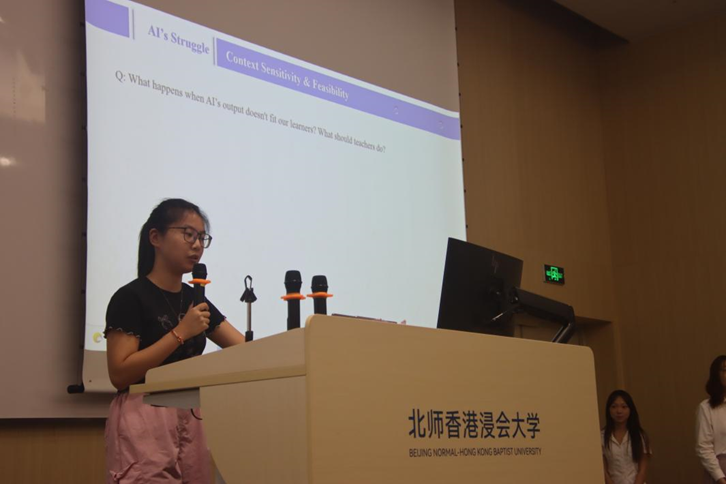
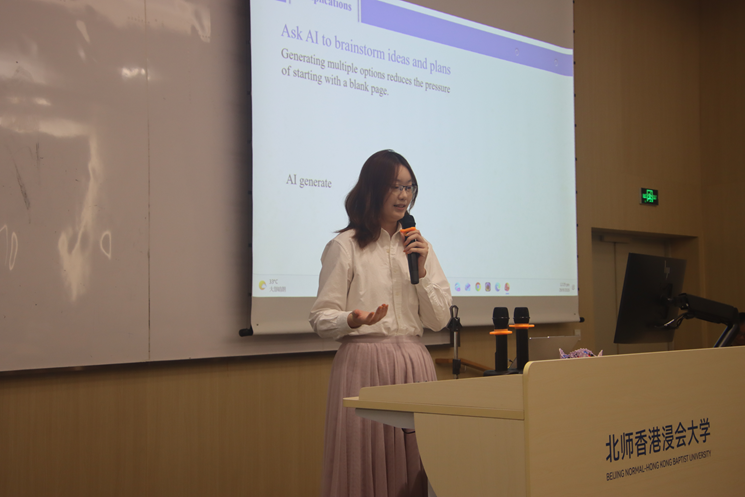
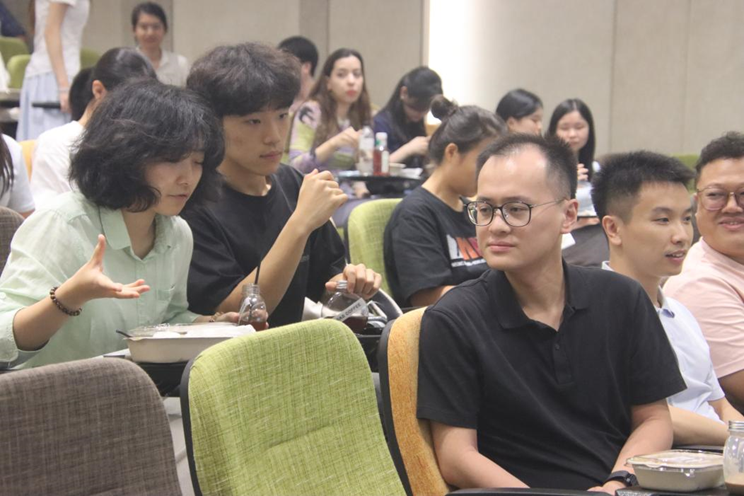
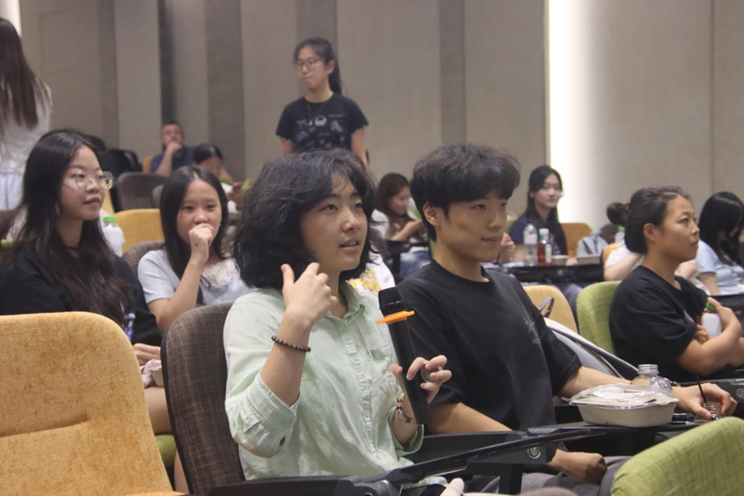
During the discussion, participants highlighted the limitations of AI-generated plans for speeches and presentations, particularly their failure to account for natural pauses, changes in pace and spontaneous responses. The exchange reinforced a central point of the session: written revisions can improve structure and reasoning, but the effectiveness of AI-assisted work must also be tested through interaction with real people.
The next TALKS@FHSS session will take place in October, and proposals are now open to all FHSS students and staff. Topics may cover curriculum, assessment, educational technology, inclusion and more, in any interactive format. TALKS@FHSS will continue to build a collaborative learning community, turning shared dialogue into practical insights for teaching and learning innovation.